
Introduction
Liver health is an important part of overall health because the liver performs many essential functions in the body. FibroScan in Hyderabad can support liver health assessment by providing non-invasive information about liver stiffness and estimated liver fat. It may be useful for people who have certain liver-related concerns or risk factors.
Some liver-related conditions can develop gradually without causing clear symptoms in the early stages. This makes appropriate monitoring important for people who have risk factors or existing liver concerns.
The procedure uses specialized elastography technology and does not require removal of liver tissue. For suitable patients, FibroScan in Hyderabad can provide useful information that may support a broader evaluation of liver health.
The results should always be interpreted along with medical history, blood tests, imaging, symptoms, and other relevant findings.
What Is FibroScan?
FibroScan in Hyderabad uses transient elastography to assess liver stiffness through controlled vibrations and ultrasound-based technology. A specialized probe is placed against the skin over the liver area.
The device measures how vibrations travel through the liver tissue. The measurement is then used to calculate liver stiffness.
Liver stiffness can provide information relevant to the assessment of fibrosis. Fibrosis refers to the development of scar tissue in the liver.
FibroScan in Hyderabad can also provide a Controlled Attenuation Parameter, commonly known as CAP. CAP is used to estimate the amount of fat in the liver.
It is important to understand that FibroScan is an assessment tool. It does not diagnose every type of liver disease and should not be interpreted as a complete health evaluation on its own.
Why Is FibroScan Used?
Liver stiffness and liver fat can be important considerations when evaluating certain liver conditions.
FibroScan in Hyderabad may be recommended for people with suspected or known fatty liver, certain chronic liver conditions, abnormal liver-related blood tests, or other relevant risk factors.
The test can provide additional information without requiring an invasive procedure.
For some patients, FibroScan in Hyderabad may also be useful for follow-up monitoring when a healthcare professional believes repeat assessment is appropriate.
The decision to undergo FibroScan should be based on individual medical circumstances rather than simply choosing the test because it is available.
FibroScan in Hyderabad: Who May Need It?
Not everyone requires FibroScan. A doctor may recommend it after considering medical history, symptoms, risk factors, previous investigations, and existing conditions.
People with suspected fatty liver may be considered for liver stiffness and fat assessment.
Individuals with certain chronic liver conditions may also require periodic monitoring as part of their overall care.
FibroScan in Hyderabad can be particularly useful when a healthcare professional wants non-invasive information about liver stiffness or estimated liver fat.
People with metabolic risk factors such as obesity, diabetes, high triglycerides, or abnormal cholesterol may also be evaluated for liver health depending on their individual circumstances.
People With Fatty Liver
Fatty liver occurs when excess fat accumulates in liver cells. It can be associated with metabolic conditions and lifestyle-related risk factors.
FibroScan in Hyderabad can provide CAP measurements that estimate liver fat and liver stiffness measurements that may contribute to fibrosis assessment.
However, CAP is an estimate and should not be treated as a standalone diagnosis.
Your healthcare professional may combine FibroScan findings with blood tests, ultrasound, medical history, and other investigations.
People With Known Liver Conditions
People who already have a diagnosed liver condition may require ongoing monitoring.
FibroScan in Hyderabad can provide non-invasive measurements that may be useful during appropriate follow-up.
The frequency of monitoring depends on the underlying condition and the recommendations of the treating healthcare professional.
How to Prepare for FibroScan in Hyderabad
Proper preparation can help make the examination easier and may contribute to reliable measurements.
FibroScan in Hyderabad preparation instructions can vary between patients and diagnostic centres, so it is important to follow the specific instructions provided before your appointment.
Fasting may be recommended before the examination. The exact fasting duration should be confirmed with your healthcare provider or diagnostic centre.
Avoid making assumptions about preparation requirements because instructions can vary.
Follow Fasting Instructions
Some providers recommend fasting before FibroScan because food intake may influence measurements.
If you are asked to fast, follow the instructions carefully.
FibroScan in Hyderabad should be performed according to the preparation guidance provided for your particular appointment.
If you have diabetes or another condition that makes fasting difficult, inform your healthcare professional before the test so appropriate instructions can be provided.
Inform the Healthcare Professional
Before FibroScan in Hyderabad, tell the healthcare professional about relevant medical conditions, previous liver investigations, and medications you are taking.
Do not stop prescribed medication unless your doctor specifically instructs you to do so.
Providing accurate medical information can help your healthcare team understand the report in the correct clinical context.
Wear Comfortable Clothing
Comfortable clothing can make the examination process easier.
The upper-right portion of the abdomen needs to be accessible because the probe is placed over the liver area.
The examination itself is generally straightforward and does not require a surgical procedure.
FibroScan in Hyderabad: Step-by-Step Procedure
Understanding what happens during the examination can help patients feel more prepared.
FibroScan in Hyderabad is generally performed while the patient lies comfortably on their back.
The healthcare professional identifies an appropriate area over the liver and applies a small amount of gel to the skin.
A specialized FibroScan probe is then placed against the abdomen.
During the Measurement
The device sends controlled vibrations through the liver.
The machine measures the movement of waves through the liver tissue and calculates liver stiffness.
FibroScan in Hyderabad generally does not involve needles, surgical cuts, or removal of liver tissue.
Several measurements may be taken to obtain a reliable examination.
The healthcare professional performing the test can guide you about positioning and breathing during the measurement.
How Long Does It Take?
The actual measurement process is usually brief, although total appointment time can vary.
FibroScan in Hyderabad is generally designed to be a convenient non-invasive assessment.
The time required may depend on preparation, positioning, the number of measurements required, and the diagnostic centre’s workflow.
Is FibroScan Painful?
One of the important features of FibroScan is that it is non-invasive.
During FibroScan in Hyderabad, the patient does not normally need a needle or surgical incision. The probe is placed against the skin over the liver.
You may feel mild pressure or a small vibration while the device takes measurements.
Most people find the examination straightforward, but individual experiences can differ.
If you experience discomfort or have concerns during the procedure, inform the healthcare professional.
FibroScan Results: What Do They Mean?
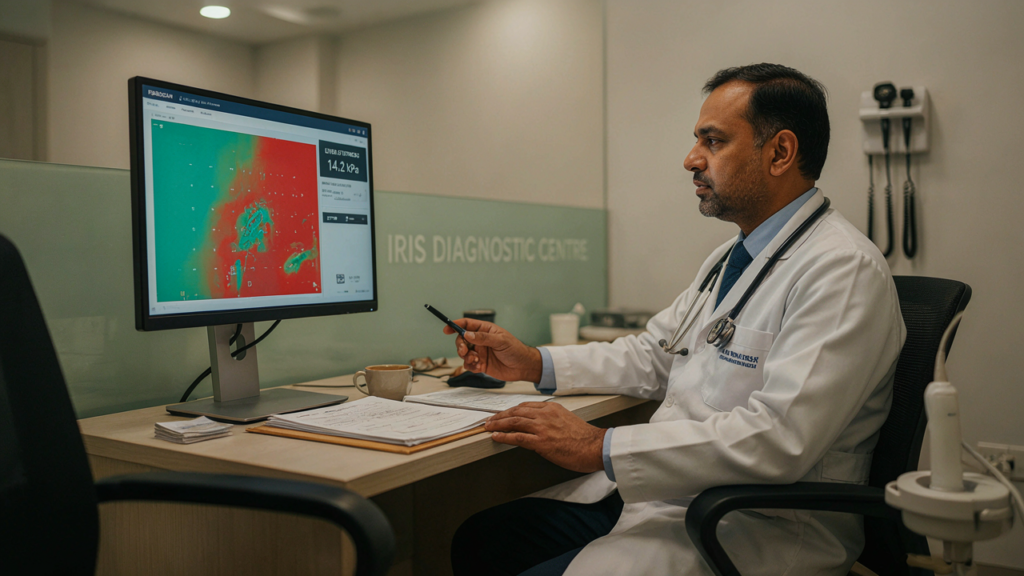
After the examination, the report may contain information about liver stiffness and CAP.
FibroScan in Hyderabad results are generally expressed using specific measurement units. Liver stiffness is commonly reported in kilopascals, or kPa.
CAP values are used to estimate liver fat.
These numbers can provide useful information, but they should not be interpreted without appropriate clinical context.
Understanding Liver Stiffness
Liver stiffness is one of the key measurements obtained through FibroScan.
Higher liver stiffness can sometimes be associated with greater fibrosis. However, stiffness can also be affected by other factors, including inflammation and congestion.
FibroScan in Hyderabad therefore provides a measurement that needs professional interpretation.
A healthcare professional may compare the result with your medical history, blood tests, imaging, and other findings.
What Is Fibrosis?
Fibrosis refers to the development of scar tissue in the liver.
Long-term liver injury can sometimes result in increasing fibrosis. Monitoring fibrosis can therefore be an important part of managing certain liver conditions.
FibroScan in Hyderabad can provide liver stiffness measurements that may help healthcare professionals assess fibrosis risk without taking a tissue sample.
The measurement alone does not establish the complete stage or cause of liver disease in every patient.
Understanding CAP
CAP stands for Controlled Attenuation Parameter.
It is a measurement used to estimate liver fat.
FibroScan in Hyderabad can provide CAP information that may be useful when evaluating suspected or known fatty liver.
CAP results should be interpreted according to appropriate clinical information and should not be used as a standalone diagnosis.
FibroScan in Hyderabad: Major Benefits
There are several reasons healthcare professionals may choose FibroScan for appropriate patients.
The examination is non-invasive and can provide liver stiffness and estimated liver fat measurements.
FibroScan in Hyderabad can therefore offer useful information without requiring a liver tissue sample.
1. Non-Invasive Assessment
FibroScan does not require surgical cutting or removal of liver tissue.
This makes FibroScan in Hyderabad a convenient option for selected patients who need liver stiffness or fat assessment.
2. Quick Examination
The actual measurement is generally completed within a short period.
FibroScan in Hyderabad can therefore be convenient for patients who need an appropriate liver assessment without a lengthy procedure.
3. Liver Stiffness Measurement
FibroScan provides a measurement related to liver stiffness.
FibroScan in Hyderabad may therefore contribute useful information when healthcare professionals are evaluating possible fibrosis.
4. Liver Fat Estimation
The CAP measurement can provide an estimate of liver fat.
This can be useful for people being assessed for fatty liver or related metabolic concerns.
5. Useful for Follow-Up
Some patients may need repeated liver assessment.
FibroScan in Hyderabad can be repeated when clinically appropriate, allowing healthcare professionals to compare measurements over time.
The timing of repeat examinations should be decided by a healthcare professional.
FibroScan vs Liver Biopsy
FibroScan and liver biopsy are different types of investigations.
A liver biopsy involves removing a small tissue sample from the liver for microscopic examination.
FibroScan uses a non-invasive technique to measure liver stiffness and estimate liver fat.
FibroScan in Hyderabad can be useful when non-invasive assessment is appropriate, while biopsy may be recommended in selected clinical situations where detailed tissue information is needed.
Neither test should automatically be considered a replacement for the other.
| Feature | FibroScan | Liver Biopsy |
|---|---|---|
| Type | Non-invasive | Invasive |
| Tissue removal | No | Yes |
| Liver stiffness | Measures stiffness | Assessed indirectly through tissue |
| Liver fat | CAP estimates fat | Tissue examination |
| Needle required | No | Yes |
| Surgical incision | No | Invasive procedure |
| Repeat monitoring | Can be repeated when advised | Not usually preferred for routine repeated monitoring |
| Interpretation | Requires clinical context | Tissue examined by pathology |
The appropriate investigation depends on the patient’s condition and the doctor’s assessment.
FibroScan and Fatty Liver Monitoring
Fatty liver can be associated with metabolic health and may occur in people with obesity, diabetes, abnormal cholesterol, or other risk factors.
FibroScan in Hyderabad may provide CAP and liver stiffness measurements that contribute to evaluation of fatty liver.
Lifestyle changes can also be an important part of management.
A balanced diet, appropriate physical activity, healthy weight management, and proper management of metabolic conditions may be discussed with a healthcare professional.
FibroScan can provide measurements, but it cannot replace healthy lifestyle practices.
Factors That Can Affect FibroScan Results
FibroScan is useful, but several factors can influence measurements.
Inflammation, congestion, food intake, and certain patient-related factors may affect liver stiffness readings.
Technical factors can also influence the quality of an examination.
FibroScan in Hyderabad results should therefore be interpreted by a qualified healthcare professional rather than judged only from one numerical value.
If a result appears unexpected, your doctor may recommend repeating the examination or performing additional investigations.
What Happens After the FibroScan?
Once the examination is completed, the results can be reviewed by the appropriate healthcare professional.
FibroScan in Hyderabad findings may be considered alongside blood investigations, ultrasound findings, symptoms, medical history, and risk factors.
Your doctor may decide that no additional testing is immediately required, or may recommend further evaluation depending on the results.
The next step should always be based on your individual medical circumstances.
Why Medical Interpretation Is Important
It can be tempting to search for a specific FibroScan number online and immediately compare it with your report.
However, this approach can be misleading.
FibroScan in Hyderabad measurements need context because the same value may have different implications depending on the patient’s condition and other clinical findings.
A healthcare professional can explain the result and determine whether further evaluation or monitoring is appropriate.
Getting FibroScan at IRIS Diagnostic Centre
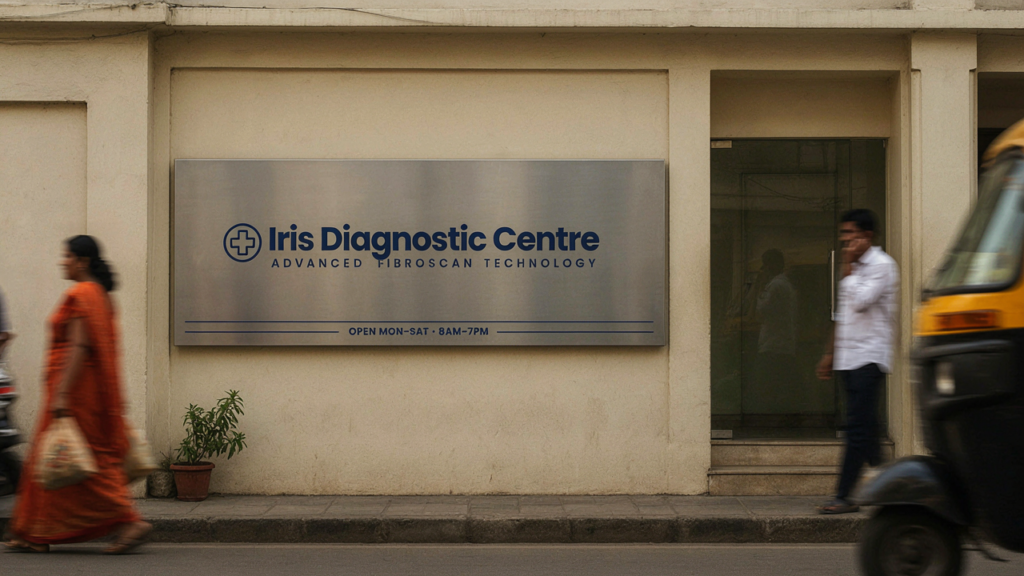
Patients looking for liver assessment in Hyderabad may discuss their testing requirements with IRIS Diagnostic Centre.
At IRIS Diagnostic Centre, patients can ask the diagnostic team about the FibroScan procedure, preparation requirements, reporting process, and other relevant instructions before scheduling their examination.
FibroScan in Hyderabad should always be performed using appropriate equipment and by trained professionals following suitable examination procedures.
Patients should also share relevant medical information so that the report can be understood in the right clinical context.
For any specific medical concern, consultation with a qualified healthcare professional remains important.
How to Support Better Liver Health
A FibroScan examination is only one part of liver care.
People can also support their general health through balanced nutrition, regular physical activity, healthy weight management, appropriate alcohol choices, and proper management of conditions such as diabetes and high cholesterol.
FibroScan in Hyderabad can provide useful information when it is recommended as part of a broader liver health plan.
Regular medical follow-up may be particularly important for people who already have a diagnosed liver condition.
Avoiding self-medication and discussing long-term medication use with a healthcare professional can also be important for people with liver concerns.
When Should You Talk to a Doctor?
You may wish to discuss liver health with a doctor if you have abnormal liver-related blood test results, suspected fatty liver, a known liver condition, or relevant metabolic risk factors.
FibroScan in Hyderabad may be recommended after your doctor reviews your medical history and previous investigations.
Symptoms such as persistent abdominal discomfort, unexplained fatigue, jaundice, swelling, or other concerning changes should also be discussed with a healthcare professional rather than managed through self-diagnosis.
Frequently Asked Questions
1. What is FibroScan used for?
FibroScan is used to measure liver stiffness and estimate liver fat through CAP. It can contribute to the assessment and monitoring of selected liver conditions.
2. Is FibroScan painful?
The procedure is generally non-invasive. The probe is placed against the skin, and you may feel mild pressure or vibration during measurements.
3. Do I need to fast before FibroScan?
Fasting may be recommended by some providers. Follow the specific instructions given by your diagnostic centre or doctor.
4. How long does FibroScan take?
The actual measurement is generally quick. Total appointment time can vary depending on preparation and the examination process.
5. Does FibroScan detect fatty liver?
FibroScan can provide a CAP measurement that estimates liver fat. The result should be interpreted together with other clinical information.
6. Can FibroScan detect fibrosis?
FibroScan measures liver stiffness, which can provide information relevant to fibrosis assessment. However, stiffness can be affected by factors other than fibrosis.
7. Can FibroScan replace a liver biopsy?
Not in every situation. FibroScan and biopsy provide different types of information. Your doctor can determine which investigation is appropriate.
8. Can FibroScan be repeated?
Yes. Repeat examinations may be recommended for selected patients who need ongoing monitoring.
9. What does CAP mean?
CAP means Controlled Attenuation Parameter. It is used to estimate liver fat.
10. Who may benefit from FibroScan?
People with suspected or known fatty liver, certain chronic liver conditions, abnormal liver-related tests, or specific risk factors may be considered for FibroScan when clinically appropriate.
11. Does FibroScan diagnose all liver diseases?
No. FibroScan provides specific information about liver stiffness and estimated fat. Other investigations may be required to evaluate different liver conditions.
12. Can I understand my FibroScan report myself?
You can review the values, but medical interpretation is recommended. Your doctor can explain the results based on your complete clinical history.
13. Is FibroScan suitable for everyone?
Not necessarily. Suitability and measurement reliability can depend on individual medical and technical factors. A healthcare professional can determine whether it is appropriate.
14. What should I do after a FibroScan?
Discuss the results with your doctor. Depending on the findings, your doctor may recommend lifestyle changes, additional tests, treatment, or follow-up monitoring.
Final Thoughts
Understanding liver health can help people take a more proactive approach to their overall well-being. Appropriate monitoring can be particularly useful for people with known liver conditions or risk factors.
FibroScan in Hyderabad offers a non-invasive method of measuring liver stiffness and estimating liver fat when clinically appropriate.
The preparation is generally straightforward, the procedure is non-invasive, and the examination can provide useful measurements for medical evaluation.
However, a FibroScan report should never be interpreted in isolation. Liver stiffness and CAP values need to be considered alongside medical history, blood tests, imaging, symptoms, and other relevant information.
If your doctor recommends liver monitoring, ask about the purpose of the examination, preparation requirements, expected results, and appropriate follow-up.
For patients considering FibroScan in Hyderabad, discussing the examination with a qualified healthcare professional and a reliable diagnostic centre can help ensure that the test is appropriate for their individual needs.
Early awareness, healthy lifestyle habits, appropriate testing, and regular professional follow-up can all contribute to a more informed approach to long-term liver care.
Call or WhatsApp: +91 81422 01122