
FibroScan in Hyderabad: 8 Smart Ways to Support Better Liver Care
Introduction
The liver performs hundreds of important functions every day. It helps process nutrients, supports digestion, stores energy, manages several substances in the bloodstream, and plays an important role in the body’s natural metabolic processes.
Because the liver can sometimes be affected without causing noticeable symptoms in the early stages, regular attention to liver health can be valuable. People with certain risk factors may benefit from discussing appropriate monitoring with a healthcare professional.
FibroScan in Hyderabad is a non-invasive technology that can provide information about liver stiffness and estimate liver fat. It can be used as part of a broader liver health assessment when recommended by a doctor.
Better liver care is not based on one test alone. Healthy lifestyle habits, appropriate medical investigations, regular follow-up, and professional guidance all have an important role.
This guide explains eight smart ways to support better liver care and how FibroScan may fit into a personalized monitoring approach.
What Is FibroScan?
FibroScan in Hyderabad uses transient elastography to measure liver stiffness without removing a tissue sample. A specialized probe is placed against the skin over the liver area.
The device sends controlled vibrations through the liver and measures how the resulting wave travels through the tissue. This information is converted into a liver stiffness measurement.
The examination can also provide a Controlled Attenuation Parameter, commonly called CAP. CAP is used to estimate the amount of fat present in the liver.
It is important to understand that FibroScan does not diagnose every liver condition. Results need to be interpreted together with medical history, blood tests, imaging, symptoms, and other relevant information.
Why Better Liver Care Matters
Liver health can be influenced by several factors, including metabolic health, certain infections, alcohol consumption, medications, weight, diet, and existing medical conditions.
Some liver problems may progress gradually. A person may not always notice obvious symptoms while changes are developing.
FibroScan in Hyderabad can provide objective measurements that may help healthcare professionals evaluate liver stiffness and estimated liver fat when clinically appropriate.
Early awareness can encourage people to discuss their health more proactively. It can also help doctors decide whether additional investigations or follow-up monitoring may be useful.
8 Smart Ways to Support Better Liver Care
1. Understand Your Liver Health Risk Factors
The first smart step is to understand factors that may affect your liver. These can include obesity, diabetes, high cholesterol, high triglycerides, certain infections, regular alcohol consumption, and a history of liver disease.
Family history and existing medical conditions may also be relevant. However, having a risk factor does not automatically mean that a person has liver disease.
FibroScan in Hyderabad may be recommended for selected people when a healthcare professional wants additional information about liver stiffness or liver fat.
Knowing your risk profile can help you have a more productive conversation with your doctor.
Instead of waiting for symptoms, people with relevant risk factors can ask whether routine liver-related evaluation is appropriate for them.
Why Risk Assessment Is Important
Risk assessment helps healthcare professionals determine which investigations may be useful.
A doctor may consider your age, medical history, lifestyle, blood test results, medications, family history, and existing conditions before recommending a particular test.
FibroScan in Hyderabad can be one component of this assessment, but it should be selected based on individual clinical needs.
A personalized approach is generally more meaningful than following a fixed testing schedule without medical guidance.
2. Maintain a Balanced and Nutritious Diet
Food choices can influence overall metabolic health, which is closely connected with liver health.
A balanced eating pattern can include vegetables, fruits, whole grains, suitable sources of protein, legumes, and healthy fats. Portion control can also be important.
Reducing excessive intake of highly processed foods, added sugars, and unhealthy fats may support healthier lifestyle goals.
FibroScan in Hyderabad can provide information about liver fat estimation, but a scan does not replace healthy dietary habits.
A person with fatty liver or metabolic risk factors may benefit from discussing an individualized nutrition plan with a qualified healthcare professional.
Focus on Sustainable Changes
Extreme diets are not necessary for everyone. Sustainable changes are often easier to maintain over the long term.
Small improvements, such as increasing vegetables, choosing healthier cooking methods, reducing sugary drinks, and controlling portion sizes, can contribute to better overall nutrition.
FibroScan in Hyderabad may be useful for monitoring selected liver-related measurements while lifestyle improvements are being addressed.
However, changes in FibroScan measurements should always be interpreted by a healthcare professional rather than judged from a single number.
3. Stay Physically Active
Regular physical activity is another important part of a healthy lifestyle. Exercise can support cardiovascular fitness, weight management, and metabolic health.
Walking, cycling, swimming, strength training, and other suitable activities can be incorporated according to an individual’s abilities and medical condition.
FibroScan in Hyderabad is an assessment tool, whereas physical activity is one of the everyday habits that can contribute to overall health.
People who have been inactive for a long period should consider starting gradually and seeking professional advice when necessary.
Make Exercise Consistent
Consistency can matter more than choosing an extremely demanding workout.
A realistic activity routine can make it easier to maintain healthy habits over time. Combining aerobic activity with appropriate strength exercises may support broader fitness goals.
For people being monitored for fatty liver or other liver concerns, FibroScan in Hyderabad may be included in follow-up when recommended by their healthcare professional.
The purpose of follow-up is to understand health trends rather than focus only on one isolated measurement.
4. Manage Weight and Metabolic Health
Excess body weight can be associated with metabolic conditions that may also affect liver health. Diabetes, insulin resistance, abnormal cholesterol, and high triglycerides can be important considerations.
Weight management should be approached in a healthy and sustainable manner rather than through sudden or extreme measures.
FibroScan in Hyderabad can provide liver stiffness and CAP measurements that may contribute to assessment in people with metabolic risk factors.
However, a scan alone cannot determine the complete state of metabolic health. Blood glucose, lipid levels, blood pressure, weight, waist measurements, and other factors may also need consideration.
Monitor Related Health Conditions
People with diabetes or high cholesterol should follow the treatment and monitoring plan provided by their healthcare professional.
Keeping these conditions under control can be an important part of comprehensive health management.
FibroScan in Hyderabad may be considered when a doctor wants additional non-invasive information about liver status.
The decision depends on individual circumstances rather than simply having one particular metabolic condition.

5. Avoid Excessive Alcohol Consumption
Alcohol can affect liver health, particularly when consumed excessively or regularly over time.
People who consume alcohol should discuss their individual risk with a healthcare professional, especially if they already have a liver condition or abnormal liver tests.
FibroScan in Hyderabad may provide information about liver stiffness and estimated fat, but it does not make excessive alcohol consumption safe.
For people with alcohol-related liver concerns, professional guidance is particularly important.
Make Informed Choices
Understanding the relationship between alcohol and liver health can encourage more informed lifestyle decisions.
If someone has already been diagnosed with a liver condition, they should follow their doctor’s specific advice regarding alcohol.
FibroScan in Hyderabad may be used as part of monitoring in selected patients, but the results should always be considered together with clinical information.
Liver care requires more than a diagnostic measurement; daily choices can also contribute significantly.
6. Follow Recommended Liver Testing
Regular healthcare checkups can help identify abnormalities that may need further assessment. Depending on the individual, doctors may recommend liver function tests, blood investigations, ultrasound, FibroScan, or other examinations.
FibroScan in Hyderabad can complement other investigations by providing non-invasive information about liver stiffness and estimated liver fat.
No single test provides a complete picture of liver health.
For example, blood tests can provide information about certain liver enzymes and other markers, while imaging can provide structural information. FibroScan offers specific measurements related to stiffness and fat estimation.
Do Not Ignore Abnormal Reports
An abnormal liver-related blood test does not necessarily mean that a person has serious liver disease.
There can be several reasons for abnormal results, and a doctor may recommend additional testing to understand the cause.
FibroScan in Hyderabad may be suggested when additional information about liver stiffness or fat is clinically useful.
It is important not to self-diagnose based on an online report or one isolated result.
7. Understand Your FibroScan Report
Getting a test is only one part of liver care. Understanding what the report means is equally important.
A FibroScan report may include a liver stiffness measurement, usually expressed in kPa, along with a CAP value related to liver fat estimation.
FibroScan in Hyderabad results should be interpreted by a healthcare professional who understands your overall medical history.
Different conditions can influence liver stiffness. Factors such as inflammation or congestion can sometimes affect measurements.
Liver Stiffness Measurement
Liver stiffness can provide information relevant to fibrosis assessment. Fibrosis refers to the development of scar tissue within the liver.
A higher stiffness measurement can sometimes be associated with greater fibrosis, but interpretation is not based on the number alone.
FibroScan in Hyderabad can help provide this measurement non-invasively, allowing healthcare professionals to incorporate it into a broader assessment.
The appropriate interpretation can vary depending on the clinical condition and other findings.
CAP Measurement
CAP, or Controlled Attenuation Parameter, is used to estimate liver fat.
A higher CAP measurement may indicate greater hepatic fat content, but the result should be interpreted according to appropriate clinical reference information.
FibroScan in Hyderabad can provide CAP data alongside liver stiffness measurements, offering two useful pieces of information during an assessment.
Patients should ask their healthcare professional to explain their report rather than attempting to compare their number directly with another person’s result.
8. Maintain Regular Follow-Up
Liver care is often more effective when it is treated as an ongoing process rather than a one-time activity.
Depending on the individual’s condition, a healthcare professional may recommend periodic blood tests, imaging, lifestyle review, or repeat FibroScan examinations.
FibroScan in Hyderabad may be useful for selected patients who require ongoing assessment of liver stiffness or estimated liver fat.
The timing of repeat testing varies. There is no single interval that is appropriate for every individual.
Compare Trends Carefully
When repeat measurements are performed, doctors can consider whether values have changed over time.
A trend may provide more context than one isolated result. However, measurement differences do not automatically prove that liver disease has improved or worsened.
FibroScan in Hyderabad follow-up results should therefore be reviewed alongside other clinical information.
This approach can help patients understand their health more realistically and avoid unnecessary worry based on individual numbers.
How FibroScan Supports Better Liver Care
The main value of FibroScan is that it can provide non-invasive measurements that contribute to liver assessment.
FibroScan in Hyderabad can measure liver stiffness and provide CAP-based estimation of liver fat. This information may help doctors determine whether further evaluation or monitoring is appropriate.
The procedure does not require a surgical incision or removal of liver tissue.
For suitable patients, its non-invasive nature can make it practical for follow-up when repeat assessment is medically recommended.
FibroScan and Preventive Health
Preventive healthcare focuses on identifying risks and maintaining health before problems become more complicated.
FibroScan in Hyderabad may support preventive liver-health discussions when a person has relevant risk factors or when a healthcare professional recommends liver stiffness or fat assessment.
Preventive care does not mean every person needs every test.
Instead, it means selecting appropriate investigations based on individual health circumstances.
What Happens During a FibroScan?
During the examination, the patient generally lies on their back while the healthcare professional places a probe over the upper-right area of the abdomen.
The probe sends controlled vibrations into the liver. The machine measures the resulting waves and calculates liver stiffness.
FibroScan in Hyderabad is generally quick and non-invasive. The exact appointment process can vary depending on the diagnostic centre and the patient’s circumstances.
The healthcare professional may take several measurements to obtain reliable readings.
Preparing for FibroScan
Patients should follow the specific preparation instructions given by their healthcare provider or diagnostic centre.
Fasting may be recommended before the examination, although exact instructions can vary.
FibroScan in Hyderabad preparation should therefore be based on the instructions provided for your appointment.
Patients should also inform the healthcare professional about relevant medical conditions and medications.
Do not stop prescribed medication unless specifically advised by your doctor.
Is FibroScan Appropriate for Everyone?
Although FibroScan can be useful for many people, it is not automatically appropriate for everyone.
Certain medical or technical factors may influence whether the examination can be performed effectively or how results should be interpreted.
FibroScan in Hyderabad should therefore be undertaken when recommended or considered appropriate by a healthcare professional.
If you have questions about suitability, discuss your medical history with your doctor before scheduling the examination.
Choosing a Diagnostic Centre
When selecting a centre for liver assessment, consider factors such as qualified professionals, appropriate equipment, patient preparation instructions, reporting procedures, and access to medical interpretation.
FibroScan in Hyderabad should ideally be performed using suitable technology and appropriate examination protocols.
A clear report can help your healthcare professional make better-informed decisions.
Patients should also understand that diagnostic results are only one component of medical care.
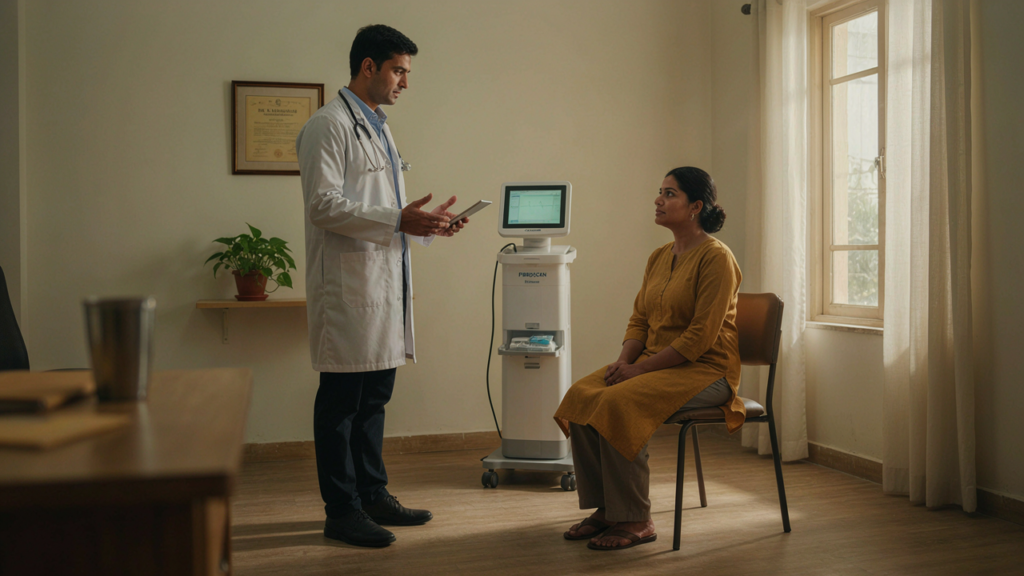
FibroScan and Other Liver Investigations
Different investigations provide different kinds of information.
Blood tests can evaluate liver enzymes and other markers. Ultrasound can provide imaging information about the liver. FibroScan measures liver stiffness and estimates liver fat.
FibroScan in Hyderabad can therefore complement other diagnostic methods rather than automatically replace them.
In some situations, doctors may recommend additional imaging or investigations depending on the suspected condition.
| Investigation | Main Information | Nature |
|---|---|---|
| Liver Function Tests | Certain blood markers related to liver health | Blood test |
| Ultrasound | Liver structure and visible abnormalities | Imaging |
| FibroScan | Liver stiffness and estimated liver fat | Non-invasive |
| CT/MRI | Detailed imaging information | Imaging |
| Liver Biopsy | Microscopic tissue information | Invasive |
The appropriate combination depends on the patient’s symptoms, risk factors, previous results, and medical history.
Benefits of Taking Liver Health Seriously
Taking liver health seriously can encourage better awareness and more proactive healthcare decisions.
FibroScan in Hyderabad can be one useful component when a doctor wants non-invasive information about liver stiffness and estimated liver fat.
Regular medical consultations can help identify appropriate lifestyle changes and investigations.
Healthy habits such as balanced nutrition, physical activity, weight management, and appropriate management of existing health conditions can complement professional monitoring.
Frequently Asked Questions
1. What is FibroScan used for?
FibroScan is used to measure liver stiffness and provide an estimate of liver fat through CAP. It can contribute to assessment of conditions involving fibrosis or fatty liver when clinically appropriate.
2. Is FibroScan painful?
The procedure is generally non-invasive. A probe is placed against the skin, and patients may feel mild pressure or vibration during measurements.
3. Does FibroScan detect fatty liver?
It can provide a CAP measurement that estimates liver fat. The result should be interpreted with other clinical findings.
4. Can FibroScan detect fibrosis?
FibroScan measures liver stiffness, which can provide information relevant to fibrosis assessment. However, increased stiffness can have causes other than fibrosis, so professional interpretation is important.
5. Is fasting required before FibroScan?
Many centres may recommend fasting before the examination, but preparation instructions can differ. Patients should follow the instructions provided by their diagnostic centre or doctor.
6. How long does a FibroScan take?
The measurement itself is generally brief. The total appointment time can vary depending on preparation and the examination process.
7. Can FibroScan replace a liver biopsy?
Not in every situation. FibroScan provides non-invasive measurements, while biopsy provides tissue for microscopic examination. The appropriate test depends on the clinical situation.
8. Can FibroScan be repeated?
Yes. Repeat assessment may be recommended for certain patients who require ongoing monitoring. The timing should be decided by a healthcare professional.
9. What does CAP mean in a FibroScan report?
CAP stands for Controlled Attenuation Parameter. It is used to estimate the amount of fat in the liver.
10. Who may benefit from FibroScan?
People with known or suspected fatty liver, certain chronic liver conditions, metabolic risk factors, or abnormal liver-related test results may be considered for FibroScan when clinically appropriate.
11. Does a normal FibroScan mean my liver is completely healthy?
Not necessarily. FibroScan provides specific information about liver stiffness and estimated fat. It does not assess every aspect of liver health.
12. How can I support better liver health?
A balanced diet, regular physical activity, healthy weight management, appropriate alcohol choices, management of metabolic conditions, and regular medical follow-up can all contribute to better overall health.
Final Thoughts
Better liver care begins with awareness, healthy habits, and appropriate medical monitoring.
The eight smart approaches discussed in this guide include understanding risk factors, maintaining a balanced diet, staying active, managing metabolic health, avoiding excessive alcohol consumption, following recommended testing, understanding reports, and maintaining appropriate follow-up.
FibroScan in Hyderabad can provide valuable non-invasive information about liver stiffness and estimated liver fat when it is clinically appropriate.
However, no diagnostic test should be considered in isolation. A healthcare professional can interpret FibroScan findings alongside blood tests, imaging, medical history, symptoms, and other relevant information.
If you have concerns about fatty liver, abnormal liver tests, chronic liver disease, or other liver-related risk factors, discuss your situation with a qualified healthcare professional.
With informed monitoring and consistent healthy habits, liver care can become a proactive part of a broader approach to long-term health.