
Understanding Male Fertility Problems Through Scrotum Scan for Infertility
Male fertility depends on several important factors, including healthy sperm production, proper hormonal function, normal testicular structure, and an effective reproductive system. When a couple experiences difficulty conceiving, identifying possible causes can help guide the next steps in evaluation and care.
A Scrotum Scan for Infertility is one of the imaging examinations that may be recommended when a doctor wants to assess the testicles and surrounding scrotal structures. It uses ultrasound technology to create images of the testicles, epididymis, blood vessels, and other tissues within the scrotum.
The examination can provide useful information about structural changes, blood flow, swelling, fluid collections, cysts, and conditions such as varicocele. When Doppler ultrasound is included, blood circulation can also be assessed in greater detail.
Male infertility does not always cause noticeable symptoms. Some structural conditions may exist without significant pain or visible changes. This makes appropriate medical evaluation important when conception is taking longer than expected.
A Scrotum Scan for Infertility can therefore become a valuable part of a broader fertility assessment when recommended by a healthcare professional.
What Is a Scrotum Scan for Infertility?
A Scrotum Scan for Infertility is an ultrasound examination performed to evaluate the testicles and other structures within the scrotum.
The scan uses high-frequency sound waves to produce real-time images. Unlike X-rays, ultrasound does not use ionizing radiation.
During the examination, the healthcare professional can assess the size, shape, position, and internal appearance of the testicles. The epididymis and surrounding tissues can also be examined.
If Doppler imaging is required, the scan can provide additional information about blood circulation.
This can be particularly useful when there is a suspicion of varicocele or another condition involving blood flow.
The examination is generally non-invasive and can provide useful information without requiring a surgical procedure.
Why Is Scrotum Scan for Infertility Important?
Male infertility can develop for many different reasons. Some causes are related to sperm production, while others may involve hormones, reproductive structures, blood circulation, genetics, or lifestyle factors.
A Scrotum Scan for Infertility can help investigate certain anatomical and vascular factors that may be relevant to reproductive health.
The scan may help doctors assess:
- Testicular structure
- Testicular size
- Epididymal appearance
- Blood circulation
- Possible varicocele
- Fluid around the testicles
- Cysts
- Swelling
- Certain structural abnormalities
- Changes following injury or surgery
The scan does not independently diagnose every form of male infertility.
Instead, it provides additional information that can be interpreted alongside medical history, physical examination, semen analysis, and other investigations.
Understanding Male Fertility
Male fertility involves a complex series of processes.
The testicles are responsible for producing sperm and testosterone. Sperm then undergo maturation and transportation through the male reproductive system.
For healthy sperm production, the testicles need appropriate blood supply and a suitable environment.
Conditions affecting the testicles or surrounding structures may sometimes interfere with these processes.
For example, varicocele can affect blood circulation around the testicle. In some men, it may be associated with changes in sperm production or fertility.
Other structural conditions may also require investigation.
Understanding these possibilities can help explain why imaging may be recommended as part of a fertility evaluation.
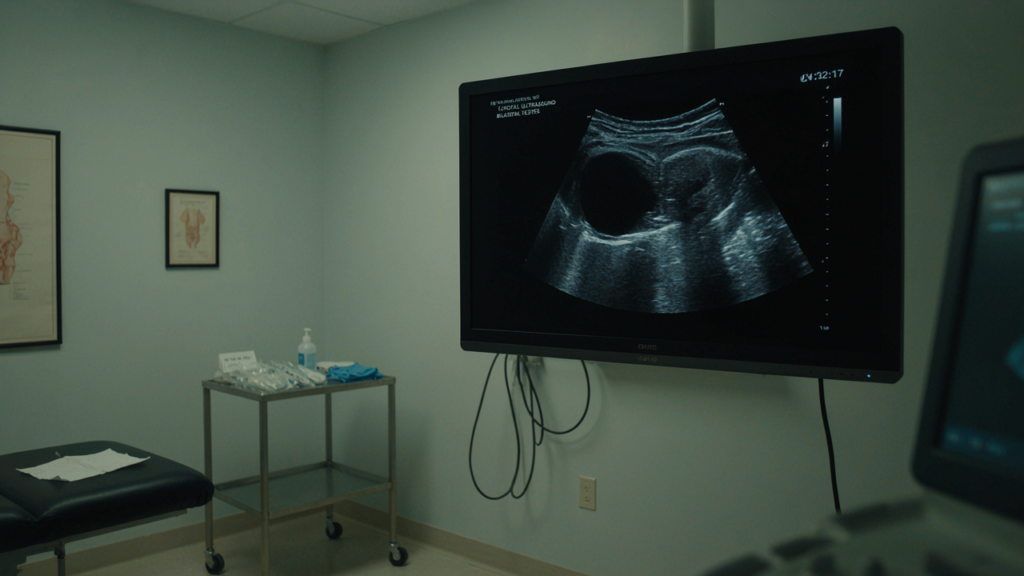
What Can a Scrotum Scan for Infertility Show?
A Scrotum Scan for Infertility can provide detailed visual information about several structures.
Testicular Structure
Ultrasound can help assess the internal appearance of the testicles.
The size, shape, and tissue characteristics can be documented as part of the examination.
Any unusual finding can then be reviewed by the appropriate healthcare professional.
Epididymis
The epididymis is located behind each testicle.
It plays an important role in sperm maturation and transport.
Ultrasound can help evaluate the epididymis and identify certain structural changes when they are present.
Blood Vessels
Blood vessels surrounding the testicles can also be assessed.
Doppler ultrasound can provide information about blood flow and may help identify abnormal venous circulation.
Fluid Collections
Ultrasound can detect fluid around the testicle.
The presence and appearance of fluid can help the doctor understand whether further evaluation may be necessary.
Cysts and Other Abnormalities
Some cystic or structural findings can also be visible during ultrasound.
Not every abnormal finding is directly associated with infertility, so professional interpretation is important.
Scrotum Scan for Infertility and Varicocele
Varicocele is one of the conditions that may be investigated during male fertility evaluation.
It involves enlargement of veins within the scrotum.
Some men with varicocele may have no noticeable symptoms, while others may experience discomfort, heaviness, or other changes.
A Scrotum Scan for Infertility with Doppler imaging can help assess blood flow within the scrotal veins.
The ultrasound findings can provide useful information about the presence and characteristics of abnormal venous circulation.
However, finding a varicocele does not automatically mean that it is the only cause of infertility.
Doctors generally consider ultrasound findings together with semen analysis, physical examination, medical history, and other relevant factors.
How Does Scrotum Scan for Infertility Work?
The procedure is relatively straightforward.
The patient usually lies comfortably on an examination table.
The scrotal area is positioned so that the healthcare professional can obtain clear images of both testicles.
A small amount of ultrasound gel is applied to the skin.
The ultrasound transducer is then gently moved across the area.
Images are captured from different angles to evaluate the testicles and surrounding structures.
If Doppler ultrasound is included, the equipment also assesses blood circulation.
The examination generally does not require an incision or injection.
The exact duration can vary depending on the examination and the findings that need to be assessed.
Is Scrotum Scan for Infertility Safe?
Ultrasound is widely used for diagnostic imaging and does not involve ionizing radiation.
A Scrotum Scan for Infertility is therefore generally considered a non-invasive imaging examination.
The transducer is placed externally on the skin.
Some people may experience mild pressure during the examination, particularly if the area is already tender or painful.
Patients should inform the healthcare professional if they are experiencing significant pain or sensitivity.
Following the instructions of the diagnostic centre can help make the examination comfortable and effective.
When May a Doctor Recommend Scrotum Scan for Infertility?
A doctor may recommend a scrotal ultrasound when there is a clinical reason to examine the testicles or surrounding structures.
Possible situations include:
- Difficulty conceiving
- Suspected varicocele
- Scrotal pain
- Swelling
- A lump or unusual finding
- Testicular discomfort
- Previous testicular injury
- History of scrotal surgery
- Abnormal physical examination
- Concerns regarding testicular size or structure
- Certain abnormalities identified during fertility evaluation
The decision depends on the individual’s symptoms, medical history, physical examination, and fertility concerns.
Not every man experiencing infertility necessarily requires a scrotal ultrasound.
What Is Doppler Ultrasound?
Doppler ultrasound is an advanced ultrasound technique that provides information about blood movement.
Standard ultrasound mainly provides anatomical images.
Doppler imaging adds information about circulation.
This can be useful when doctors are evaluating conditions associated with abnormal blood flow.
In a Scrotum Scan for Infertility, Doppler assessment may be used to examine the blood vessels around the testicles.
It can support evaluation for conditions such as varicocele.
The information from Doppler imaging can then be interpreted together with the rest of the examination and the patient’s clinical history.
Does Scrotum Scan for Infertility Diagnose Male Infertility?
A Scrotum Scan for Infertility is not a complete infertility test.
Male infertility can have many possible causes.
These may include:
- Low sperm count
- Reduced sperm movement
- Abnormal sperm shape
- Hormonal problems
- Testicular conditions
- Genetic factors
- Reproductive tract problems
- Certain infections
- Lifestyle factors
- Some medications
- Previous medical treatments
Because of this complexity, doctors may use several investigations to understand the situation.
Semen analysis is an important part of male fertility evaluation.
Hormonal tests may also be recommended in selected cases.
Ultrasound provides additional anatomical and blood-flow information when clinically appropriate.
Role of Semen Analysis Alongside Scrotum Scan
Semen analysis and ultrasound provide different types of information.
A semen analysis evaluates characteristics such as sperm concentration, movement, and morphology.
A Scrotum Scan for Infertility, on the other hand, evaluates anatomical structures and may assess blood flow.
Using both types of information can provide a broader picture of male reproductive health when both are clinically indicated.
For example, if a semen analysis shows an abnormality and ultrasound identifies a possible structural issue, the doctor can consider these findings together.
However, every patient is different, and test selection should be based on professional medical assessment.
How to Prepare for a Scrotum Scan for Infertility
Most scrotal ultrasound examinations do not require extensive preparation.
Patients should follow any specific instructions provided by the diagnostic centre.
It is useful to inform the healthcare professional about previous:
- Testicular injuries
- Scrotal surgeries
- Infections
- Pain
- Swelling
- Fertility investigations
- Known reproductive conditions
If previous ultrasound or semen analysis reports are available, taking them to the appointment may also provide useful background information.
Good communication can help the healthcare professional understand the reason for the examination and interpret the findings in the right context.
What Happens During the Scan?
The procedure usually begins with positioning the patient comfortably.
The healthcare professional applies ultrasound gel to the skin.
The transducer is then placed gently over the scrotal area.
Both testicles are generally examined to allow comparison of their appearance and structure.
The surrounding tissues and blood vessels may also be assessed.
When Doppler is required, the healthcare professional evaluates blood flow patterns.
Images are recorded during the examination.
The resulting findings are then reviewed and documented in the ultrasound report.
Understanding Your Scrotum Scan for Infertility Report
Medical imaging reports may contain terminology that is unfamiliar to patients.
A report may describe:
- Testicular size
- Testicular echotexture
- Epididymal appearance
- Blood flow
- Presence or absence of varicocele
- Fluid collections
- Cysts
- Other structural observations
It is important not to interpret individual words in isolation.
For example, an abnormal ultrasound finding does not automatically mean that infertility is present.
Similarly, a normal ultrasound does not rule out all possible causes of fertility problems.
The report should be discussed with a qualified healthcare professional who can relate the findings to the patient’s symptoms and other test results.

Benefits of Scrotum Scan for Infertility
There are several useful advantages of ultrasound when it is clinically indicated.
Non-Invasive
The examination is performed externally and does not normally require surgical access.
No Ionizing Radiation
Ultrasound uses sound waves rather than X-rays.
Structural Assessment
It can provide detailed images of the testicles and surrounding structures.
Blood Flow Evaluation
Doppler technology can assess blood circulation.
Supports Fertility Investigation
The findings can add valuable information to a broader male fertility assessment.
Helps Identify Certain Conditions
Ultrasound can help identify findings that may require further evaluation.
Convenient Imaging Method
The examination is generally straightforward and can be completed without complex preparation.
Can a Scrotum Scan Identify Testicular Problems?
Yes, ultrasound can help evaluate the structure of the testicles.
It may identify certain abnormalities involving size, shape, tissue appearance, or surrounding structures.
This can be useful when a doctor suspects that a testicular condition may be relevant to a patient’s symptoms or fertility concerns.
However, imaging findings always need clinical interpretation.
The presence of an abnormality does not necessarily mean that it is causing fertility problems.
Can Scrotum Scan Detect Testicular Cancer?
Ultrasound can help evaluate a testicular lump or other unusual finding and may identify features that require further medical assessment.
However, an ultrasound should not be considered a standalone cancer diagnosis.
If an unusual mass is identified, the doctor may recommend additional evaluation based on the imaging appearance and clinical findings.
Anyone who notices a new testicular lump, swelling, or persistent change should seek appropriate medical evaluation.
Scrotum Scan for Infertility After Testicular Injury
Previous injury to the testicles can sometimes lead to structural concerns.
If there is a history of significant trauma, ultrasound may be recommended to assess the condition of the testicular tissue and surrounding structures.
The findings can help healthcare professionals determine whether further evaluation is needed.
Patients should provide accurate information about previous injuries when discussing fertility concerns with their doctor.
Can Lifestyle Affect Male Fertility?
Male fertility is influenced by multiple factors.
Lifestyle habits may be relevant in some cases.
Smoking, excessive alcohol consumption, poor sleep, obesity, prolonged heat exposure, and certain environmental exposures may affect reproductive health.
However, lifestyle factors are only one part of the picture.
A person can have healthy lifestyle habits and still experience fertility difficulties because of medical or reproductive factors.
This is why professional evaluation is important when conception is taking longer than expected.
Importance of Early and Proper Evaluation
Fertility concerns can sometimes create uncertainty for couples.
A structured evaluation can help identify possible contributing factors.
A Scrotum Scan for Infertility may provide useful information when structural or vascular concerns are suspected.
Early investigation does not necessarily mean that a serious problem is present.
Instead, it can help clarify the situation and allow healthcare professionals to determine whether further tests or specialist consultation are appropriate.
Having accurate information can also make discussions about treatment and management more productive.
What Happens After Scrotum Scan for Infertility?
After the scan, the imaging findings are documented in a report.
The next step depends on the results and the patient’s overall fertility assessment.
If the scan identifies a possible condition, the doctor may recommend additional investigations or referral to an appropriate specialist.
If the scan is normal, the doctor may consider other potential causes of fertility difficulties.
These could include sperm-related, hormonal, genetic, or other factors.
Therefore, the scan should be viewed as one component of a complete evaluation rather than a single test that provides every answer.
Scrotum Scan for Infertility as Part of Complete Male Fertility Care
A comprehensive male fertility assessment may include several components.
These can include:
- Detailed medical history
- Physical examination
- Semen analysis
- Hormonal testing when appropriate
- Ultrasound examination when indicated
- Review of previous injuries or surgeries
- Evaluation of medications and lifestyle factors
- Additional testing when clinically required
Combining these sources of information can help healthcare professionals develop a clearer understanding of the individual’s reproductive health.
Frequently Asked Questions About Scrotum Scan for Infertility
1. What is a Scrotum Scan for Infertility?
A Scrotum Scan for Infertility is an ultrasound examination used to assess the testicles, epididymis, surrounding tissues, and blood circulation when investigating certain male reproductive or scrotal concerns.
2. Is a Scrotum Scan painful?
The examination is generally non-invasive. Some mild pressure may be felt when the ultrasound transducer is placed over the scrotal area, especially if the area is already sensitive.
3. Does Scrotum Scan for Infertility use radiation?
No. Ultrasound uses high-frequency sound waves and does not use ionizing radiation.
4. Can Scrotum Scan detect varicocele?
Yes. Ultrasound, particularly Doppler ultrasound, can help evaluate blood flow and identify features associated with varicocele.
5. Can a normal Scrotum Scan rule out infertility?
No. A normal scan does not rule out every possible cause of infertility. Other investigations, including semen analysis and hormonal evaluation when appropriate, may still be required.
6. How long does the scan take?
The duration can vary depending on the examination and whether additional Doppler assessment is required. The diagnostic centre can provide specific information about the expected appointment time.
7. Is preparation required before the scan?
Usually, extensive preparation is not required. However, patients should follow any instructions provided by their diagnostic centre.
8. Can the scan evaluate blood circulation?
Yes. Doppler ultrasound can provide information about blood flow around the testicles and may be particularly useful when evaluating suspected vascular conditions.
9. Can the scan identify testicular abnormalities?
Ultrasound can identify various structural findings involving the testicles and surrounding tissues. The importance of any finding should be discussed with a healthcare professional.
10. Is Scrotum Scan enough to diagnose male infertility?
No. Male infertility can have multiple causes. A complete evaluation may involve semen analysis, medical history, physical examination, hormone testing, ultrasound, and other investigations when required.
11. What if the scan shows varicocele?
The significance of a varicocele depends on the individual’s symptoms, examination findings, fertility history, and other test results. A healthcare professional can explain whether additional evaluation is appropriate.
12. Should I discuss my scan report with a doctor?
Yes. A doctor can interpret the report in relation to your symptoms, medical history, semen analysis, and other fertility investigations.
Conclusion
Male fertility involves many interconnected factors, and identifying possible contributing conditions can be an important part of appropriate evaluation. A Scrotum Scan for Infertility can provide useful information about the testicles, epididymis, surrounding tissues, and blood circulation.
The examination may be particularly helpful when there is a concern about varicocele, swelling, pain, structural abnormalities, previous injury, or other scrotal conditions.
However, ultrasound is only one part of male fertility assessment. A normal scan does not exclude every possible fertility problem, and an abnormal finding does not automatically mean that infertility is present.
When interpreted alongside semen analysis, medical history, physical examination, hormonal testing, and other relevant investigations, ultrasound findings can contribute to a clearer understanding of reproductive health.
If you are experiencing difficulty conceiving or have concerns about testicular or scrotal health, discussing your symptoms with a qualified healthcare professional can help determine which investigations are appropriate. A clear and comprehensive evaluation can provide valuable information and support informed decisions about the next steps in fertility care.
Call or WhatsApp: +91 81422 01122