Blog

Your blog category

Anomaly Scan

20-Week Pregnancy Scan: What Every Parent Should Know

Pregnancy is filled with important milestones, and the 20-week anomaly scan is one of the most significant. Also commonly known as the detailed pregnancy scan or fetal anomaly scan, this ultrasound gives doctors a closer look at the baby’s development and checks several important anatomical structures. For parents, an anomaly scan can be an important opportunity to understand how the pregnancy is progressing and whether the baby’s major organs and physical structures are developing as expected. At Iris Diagnostic, advanced ultrasound and pregnancy imaging services help expectant parents get detailed information during important stages of pregnancy. What Is a 20-Week Anomaly Scan? A 20-week anomaly scan is a detailed ultrasound examination generally performed around the middle of pregnancy. The main purpose of an anomaly scan is to examine the baby’s anatomy and assess whether major physical structures are developing appropriately. During the scan, the sonologist may examine the baby’s: The anomaly scan provides much more detailed anatomical information than an early routine pregnancy ultrasound. Why Is the Anomaly Scan Important? The second-trimester anomaly scan is an important part of antenatal care because many major anatomical structures are developed enough at this stage to be examined in detail. An anomaly scan can help healthcare professionals identify certain structural abnormalities or developmental concerns that may require further evaluation. However, parents should understand that an anomaly scan cannot detect every possible health condition or genetic disorder. A normal anomaly scan is reassuring, but it does not guarantee that every condition has been ruled out. When Should You Have an Anomaly Scan? The detailed anomaly scan is usually scheduled during the second trimester, commonly around 18–22 weeks of pregnancy, depending on the recommendation of the treating doctor and the circumstances of the pregnancy. Your doctor may recommend a specific timing for the anomaly scan based on your pregnancy history, previous ultrasound findings, gestational age and other clinical factors. If you are approaching the 20-week milestone, discussing the appropriate timing of your anomaly scan with your obstetrician can help you plan the examination properly. What Does an Anomaly Scan Check? One of the main purposes of an anomaly scan is to evaluate the baby’s anatomy systematically. 1. Brain and Head During the anomaly scan, the baby’s head and brain structures are examined for their appearance, size and development. 2. Face The sonologist may assess facial structures, including the profile and areas such as the upper lip, depending on the baby’s position. 3. Spine The spine is examined during the anomaly scan to evaluate its alignment and appearance. 4. Heart The baby’s heart receives particular attention during a detailed anomaly scan. Depending on the examination protocol and visibility, different views of the heart may be obtained. 5. Abdomen The stomach, abdominal wall, kidneys and bladder can be assessed during the scan. 6. Limbs The arms, legs, hands and feet may also be evaluated to check their development and appearance. 7. Placenta and Amniotic Fluid The location of the placenta and the amount of amniotic fluid are also considered during the anomaly scan. What Happens During a 20-Week Anomaly Scan? An anomaly scan is performed using ultrasound technology. You will generally lie comfortably while a trained sonologist performs the examination using an ultrasound probe over the abdomen. A layer of ultrasound gel is applied to the abdomen to help create clear images. The sonologist then examines different parts of the baby systematically. The duration of an anomaly scan can vary depending on the baby’s position, image quality and the details that need to be assessed. Sometimes, the baby may be in a position that makes certain structures difficult to see clearly. In such situations, you may be asked to move or wait briefly so additional images can be obtained. Can You See the Baby’s Face During an Anomaly Scan? You may be able to see the baby’s face and other structures during an anomaly scan, although the quality and appearance of the images depend on several factors. The baby’s position, gestational age, amount of amniotic fluid and other technical factors can affect what is visible. The primary purpose of an anomaly scan is medical assessment rather than obtaining keepsake images. Is a 20-Week Anomaly Scan Painful? An anomaly scan is generally a non-invasive ultrasound examination and is not usually painful. You may experience mild pressure from the ultrasound probe as the sonologist moves it across your abdomen. Some areas may require slightly more pressure to obtain a clearer image. If you experience significant discomfort during the anomaly scan, inform the sonologist. What If Something Is Not Clearly Visible? Sometimes, the sonologist may not be able to obtain all the required images during the first anomaly scan. This does not necessarily mean that there is a problem with the baby. Factors such as fetal position, maternal body habitus, gestational age and image quality can affect visualization. Your doctor may recommend a repeat ultrasound or additional assessment if certain structures cannot be adequately evaluated. Does a Normal Anomaly Scan Mean Everything Is Perfect? A normal anomaly scan is reassuring, but it is important to understand its limitations. An anomaly scan primarily evaluates specific anatomical structures that can be visualized through ultrasound at that stage of pregnancy. Some conditions may develop later, may not be visible on ultrasound, or may require other forms of testing. Your obstetrician can explain what your particular anomaly scan evaluated and whether any additional tests are recommended. How Should Parents Prepare for an Anomaly Scan? Preparation requirements can vary between diagnostic centres and according to the stage of pregnancy. Before your anomaly scan, ask the diagnostic centre whether you need to follow any specific instructions regarding food, water intake, previous reports or medications. It can also be helpful to carry: At Iris Diagnostic, patients can discuss scan-related requirements with the diagnostic team before their appointment. What Makes the 20-Week Pregnancy Scan Different? Pregnancy ultrasounds are performed at different stages for different purposes. An early ultrasound may focus on confirming the pregnancy, determining gestational age …

20-Week Pregnancy Scan: What Every Parent Should Know Read More »
FibroScan in Hyderabad

From Fatty Liver to Fibrosis: Understanding FibroScan in Hyderabad

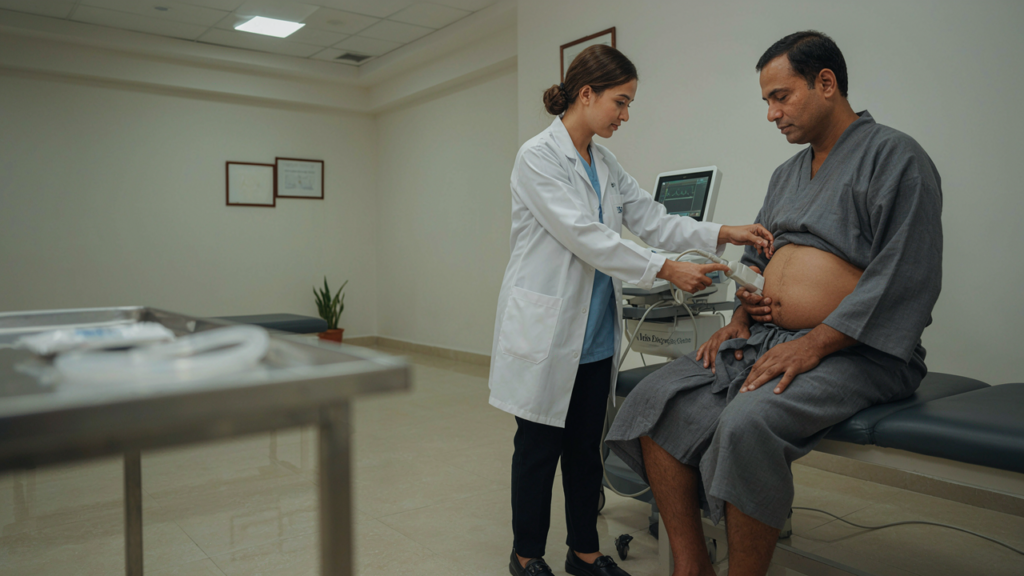
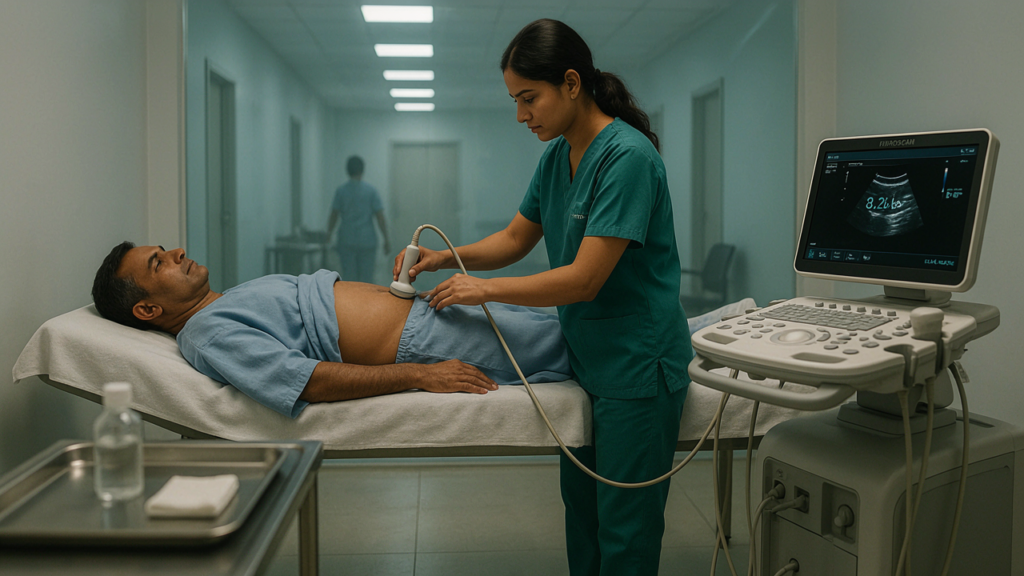
Introduction FibroScan in Hyderabad is a non-invasive liver assessment that can provide useful information about liver stiffness and help estimate liver fat. It is increasingly used as part of liver health evaluation for people with suspected fatty liver, known liver conditions, or certain risk factors. The liver performs many essential functions, including processing nutrients, supporting metabolism, storing energy, and helping manage substances in the bloodstream. Because some liver conditions can develop gradually, monitoring liver health can be an important part of preventive care. Fatty liver is one of the common liver-related concerns associated with metabolic health. In some individuals, liver fat may remain stable, while in others, ongoing liver injury can contribute to inflammation and fibrosis. Understanding the difference between liver fat and fibrosis can help patients better understand why their healthcare professional may recommend specific tests. What Is Fatty Liver? Fatty liver refers to excess fat accumulation in the liver. It may occur for several reasons and is often associated with metabolic factors such as obesity, diabetes, insulin resistance, and abnormal cholesterol or triglyceride levels. A person with fatty liver may not experience obvious symptoms. This is one reason liver health can sometimes remain unnoticed until it is identified through routine testing or an evaluation for another health concern. FibroScan in Hyderabad can provide a CAP measurement that estimates the amount of fat in the liver. CAP stands for Controlled Attenuation Parameter. The CAP measurement does not provide a complete diagnosis by itself. Doctors may consider it alongside blood tests, ultrasound findings, medical history, and other relevant information. Common Factors Associated With Fatty Liver Several factors may increase the possibility of developing fatty liver. These can include excess body weight, diabetes, high cholesterol, high triglycerides, an inactive lifestyle, and certain dietary patterns. Alcohol consumption can also contribute to liver fat and other liver problems. FibroScan in Hyderabad may be considered when a healthcare professional wants additional non-invasive information about liver fat or stiffness. However, having one risk factor does not automatically mean that a person has liver disease. Understanding Liver Fibrosis Fibrosis is different from simple fat accumulation. It refers to the development of scar tissue in the liver as a response to ongoing injury or inflammation. When liver injury continues for a long time, fibrosis can potentially progress. Advanced fibrosis can increase the risk of more serious liver complications. FibroScan in Hyderabad measures liver stiffness, which can provide information relevant to fibrosis assessment. A higher stiffness measurement may sometimes be associated with greater fibrosis. However, liver stiffness can also be influenced by factors other than fibrosis. For this reason, FibroScan results should always be interpreted in the appropriate clinical context. How Fatty Liver and Fibrosis Are Connected Fatty liver and fibrosis are related but are not the same thing. Some people may have liver fat without significant fibrosis. Others may develop inflammation and progressive scarring over time. The presence and severity of fibrosis depend on several factors, including the underlying cause and duration of liver injury. FibroScan in Hyderabad can help healthcare professionals obtain non-invasive measurements that may contribute to evaluating this progression. It is important to remember that FibroScan cannot independently determine every aspect of liver disease. How FibroScan Works FibroScan in Hyderabad uses transient elastography technology to measure liver stiffness. During the examination, a healthcare professional places a specialized probe against the skin over the liver area. The device sends controlled vibrations through the liver and measures how the resulting waves travel through the tissue. The machine then calculates a liver stiffness measurement. The examination can also provide a CAP value for estimating liver fat. Liver Stiffness Measurement Liver stiffness is commonly reported in kilopascals, or kPa. The measurement can provide information that is relevant when evaluating possible liver fibrosis. FibroScan in Hyderabad offers this measurement without requiring a needle or removal of liver tissue. However, there is no single stiffness number that should be interpreted in exactly the same way for every person. The underlying liver condition, inflammation, congestion, and other factors can influence the result. CAP Measurement CAP stands for Controlled Attenuation Parameter. It is used to estimate liver fat based on how ultrasound signals are affected as they pass through liver tissue. FibroScan in Hyderabad can provide CAP information along with liver stiffness measurement. This combination can give healthcare professionals useful information about two different aspects of liver health. CAP should still be considered an estimate rather than a standalone diagnosis. FibroScan in Hyderabad: Why It May Be Recommended Doctors may recommend FibroScan for selected patients based on their medical history and risk factors. FibroScan in Hyderabad can be useful when non-invasive information about liver stiffness or estimated liver fat is required. People with suspected fatty liver may be considered for the examination. Patients with certain chronic liver conditions may also undergo FibroScan as part of appropriate monitoring. Individuals with abnormal liver-related blood tests may sometimes require additional assessment. The decision should always be based on professional medical advice. Who May Benefit? There is no requirement that every person undergo FibroScan. It may be considered for people with known liver conditions, suspected fatty liver, metabolic risk factors, or other clinical reasons. FibroScan in Hyderabad can provide additional information when a doctor believes it may help with assessment or follow-up. Your healthcare professional may also recommend other investigations depending on your symptoms and medical history. Preparing for a FibroScan Preparation is generally straightforward, but patients should follow the instructions provided by their healthcare professional or diagnostic centre. Some centres may recommend fasting before the examination. FibroScan in Hyderabad preparation requirements can vary, so patients should confirm the exact instructions before their appointment. If fasting has been recommended, follow the specified duration carefully. People with diabetes or other conditions that may be affected by fasting should discuss this with their healthcare professional. Medication Before the Test Patients should not stop prescribed medication unless their doctor specifically advises them to do so. Tell the healthcare professional about medicines and relevant health conditions before the examination. …

From Fatty Liver to Fibrosis: Understanding FibroScan in Hyderabad Read More »

fibroscan in Hyderabad

FibroScan in Hyderabad: Preparation, Procedure, Results and Benefits

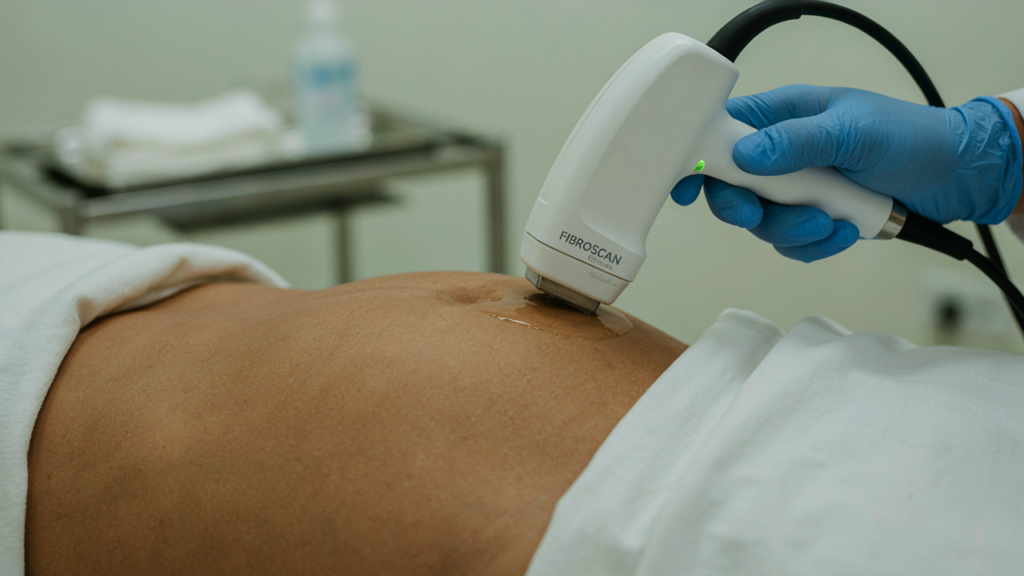
Introduction Liver health is an important part of overall health because the liver performs many essential functions in the body. FibroScan in Hyderabad can support liver health assessment by providing non-invasive information about liver stiffness and estimated liver fat. It may be useful for people who have certain liver-related concerns or risk factors. Some liver-related conditions can develop gradually without causing clear symptoms in the early stages. This makes appropriate monitoring important for people who have risk factors or existing liver concerns. The procedure uses specialized elastography technology and does not require removal of liver tissue. For suitable patients, FibroScan in Hyderabad can provide useful information that may support a broader evaluation of liver health. The results should always be interpreted along with medical history, blood tests, imaging, symptoms, and other relevant findings. What Is FibroScan? FibroScan in Hyderabad uses transient elastography to assess liver stiffness through controlled vibrations and ultrasound-based technology. A specialized probe is placed against the skin over the liver area. The device measures how vibrations travel through the liver tissue. The measurement is then used to calculate liver stiffness. Liver stiffness can provide information relevant to the assessment of fibrosis. Fibrosis refers to the development of scar tissue in the liver. FibroScan in Hyderabad can also provide a Controlled Attenuation Parameter, commonly known as CAP. CAP is used to estimate the amount of fat in the liver. It is important to understand that FibroScan is an assessment tool. It does not diagnose every type of liver disease and should not be interpreted as a complete health evaluation on its own. Why Is FibroScan Used? Liver stiffness and liver fat can be important considerations when evaluating certain liver conditions. FibroScan in Hyderabad may be recommended for people with suspected or known fatty liver, certain chronic liver conditions, abnormal liver-related blood tests, or other relevant risk factors. The test can provide additional information without requiring an invasive procedure. For some patients, FibroScan in Hyderabad may also be useful for follow-up monitoring when a healthcare professional believes repeat assessment is appropriate. The decision to undergo FibroScan should be based on individual medical circumstances rather than simply choosing the test because it is available. FibroScan in Hyderabad: Who May Need It? Not everyone requires FibroScan. A doctor may recommend it after considering medical history, symptoms, risk factors, previous investigations, and existing conditions. People with suspected fatty liver may be considered for liver stiffness and fat assessment. Individuals with certain chronic liver conditions may also require periodic monitoring as part of their overall care. FibroScan in Hyderabad can be particularly useful when a healthcare professional wants non-invasive information about liver stiffness or estimated liver fat. People with metabolic risk factors such as obesity, diabetes, high triglycerides, or abnormal cholesterol may also be evaluated for liver health depending on their individual circumstances. People With Fatty Liver Fatty liver occurs when excess fat accumulates in liver cells. It can be associated with metabolic conditions and lifestyle-related risk factors. FibroScan in Hyderabad can provide CAP measurements that estimate liver fat and liver stiffness measurements that may contribute to fibrosis assessment. However, CAP is an estimate and should not be treated as a standalone diagnosis. Your healthcare professional may combine FibroScan findings with blood tests, ultrasound, medical history, and other investigations. People With Known Liver Conditions People who already have a diagnosed liver condition may require ongoing monitoring. FibroScan in Hyderabad can provide non-invasive measurements that may be useful during appropriate follow-up. The frequency of monitoring depends on the underlying condition and the recommendations of the treating healthcare professional. How to Prepare for FibroScan in Hyderabad Proper preparation can help make the examination easier and may contribute to reliable measurements. FibroScan in Hyderabad preparation instructions can vary between patients and diagnostic centres, so it is important to follow the specific instructions provided before your appointment. Fasting may be recommended before the examination. The exact fasting duration should be confirmed with your healthcare provider or diagnostic centre. Avoid making assumptions about preparation requirements because instructions can vary. Follow Fasting Instructions Some providers recommend fasting before FibroScan because food intake may influence measurements. If you are asked to fast, follow the instructions carefully. FibroScan in Hyderabad should be performed according to the preparation guidance provided for your particular appointment. If you have diabetes or another condition that makes fasting difficult, inform your healthcare professional before the test so appropriate instructions can be provided. Inform the Healthcare Professional Before FibroScan in Hyderabad, tell the healthcare professional about relevant medical conditions, previous liver investigations, and medications you are taking. Do not stop prescribed medication unless your doctor specifically instructs you to do so. Providing accurate medical information can help your healthcare team understand the report in the correct clinical context. Wear Comfortable Clothing Comfortable clothing can make the examination process easier. The upper-right portion of the abdomen needs to be accessible because the probe is placed over the liver area. The examination itself is generally straightforward and does not require a surgical procedure. FibroScan in Hyderabad: Step-by-Step Procedure Understanding what happens during the examination can help patients feel more prepared. FibroScan in Hyderabad is generally performed while the patient lies comfortably on their back. The healthcare professional identifies an appropriate area over the liver and applies a small amount of gel to the skin. A specialized FibroScan probe is then placed against the abdomen. During the Measurement The device sends controlled vibrations through the liver. The machine measures the movement of waves through the liver tissue and calculates liver stiffness. FibroScan in Hyderabad generally does not involve needles, surgical cuts, or removal of liver tissue. Several measurements may be taken to obtain a reliable examination. The healthcare professional performing the test can guide you about positioning and breathing during the measurement. How Long Does It Take? The actual measurement process is usually brief, although total appointment time can vary. FibroScan in Hyderabad is generally designed to be a convenient non-invasive assessment. The time required may depend on preparation, …

FibroScan in Hyderabad: Preparation, Procedure, Results and Benefits Read More »

fibroscan in Hyderabad

FibroScan in Hyderabad: 8 Smart Ways to Support Better Liver Care

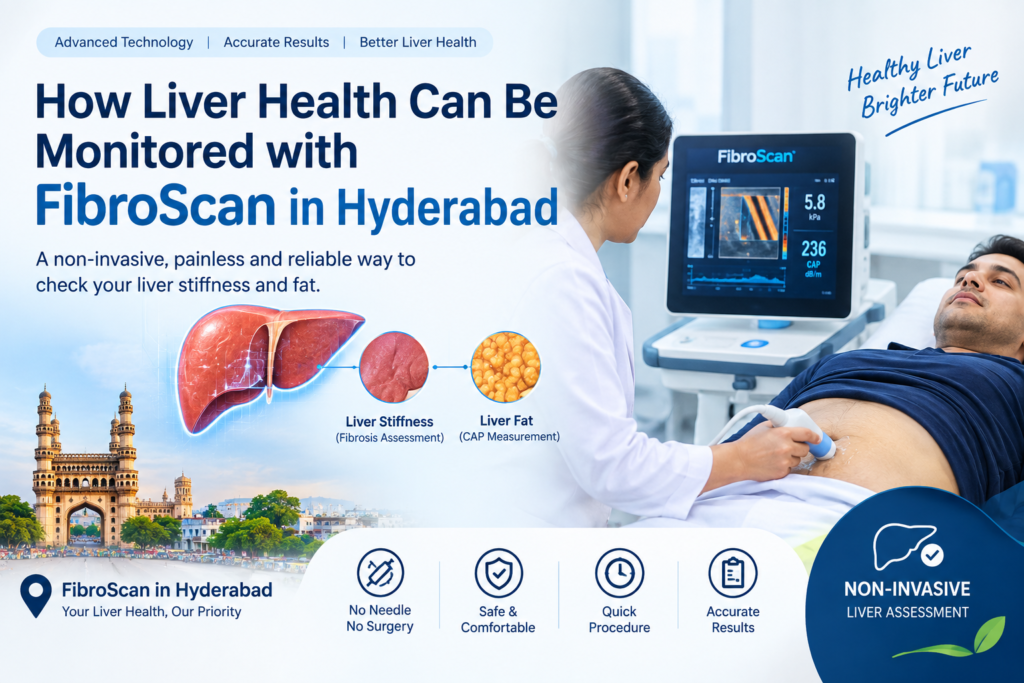
FibroScan in Hyderabad: 8 Smart Ways to Support Better Liver Care Introduction The liver performs hundreds of important functions every day. It helps process nutrients, supports digestion, stores energy, manages several substances in the bloodstream, and plays an important role in the body’s natural metabolic processes. Because the liver can sometimes be affected without causing noticeable symptoms in the early stages, regular attention to liver health can be valuable. People with certain risk factors may benefit from discussing appropriate monitoring with a healthcare professional. FibroScan in Hyderabad is a non-invasive technology that can provide information about liver stiffness and estimate liver fat. It can be used as part of a broader liver health assessment when recommended by a doctor. Better liver care is not based on one test alone. Healthy lifestyle habits, appropriate medical investigations, regular follow-up, and professional guidance all have an important role. This guide explains eight smart ways to support better liver care and how FibroScan may fit into a personalized monitoring approach. What Is FibroScan? FibroScan in Hyderabad uses transient elastography to measure liver stiffness without removing a tissue sample. A specialized probe is placed against the skin over the liver area. The device sends controlled vibrations through the liver and measures how the resulting wave travels through the tissue. This information is converted into a liver stiffness measurement. The examination can also provide a Controlled Attenuation Parameter, commonly called CAP. CAP is used to estimate the amount of fat present in the liver. It is important to understand that FibroScan does not diagnose every liver condition. Results need to be interpreted together with medical history, blood tests, imaging, symptoms, and other relevant information. Why Better Liver Care Matters Liver health can be influenced by several factors, including metabolic health, certain infections, alcohol consumption, medications, weight, diet, and existing medical conditions. Some liver problems may progress gradually. A person may not always notice obvious symptoms while changes are developing. FibroScan in Hyderabad can provide objective measurements that may help healthcare professionals evaluate liver stiffness and estimated liver fat when clinically appropriate. Early awareness can encourage people to discuss their health more proactively. It can also help doctors decide whether additional investigations or follow-up monitoring may be useful. 8 Smart Ways to Support Better Liver Care 1. Understand Your Liver Health Risk Factors The first smart step is to understand factors that may affect your liver. These can include obesity, diabetes, high cholesterol, high triglycerides, certain infections, regular alcohol consumption, and a history of liver disease. Family history and existing medical conditions may also be relevant. However, having a risk factor does not automatically mean that a person has liver disease. FibroScan in Hyderabad may be recommended for selected people when a healthcare professional wants additional information about liver stiffness or liver fat. Knowing your risk profile can help you have a more productive conversation with your doctor. Instead of waiting for symptoms, people with relevant risk factors can ask whether routine liver-related evaluation is appropriate for them. Why Risk Assessment Is Important Risk assessment helps healthcare professionals determine which investigations may be useful. A doctor may consider your age, medical history, lifestyle, blood test results, medications, family history, and existing conditions before recommending a particular test. FibroScan in Hyderabad can be one component of this assessment, but it should be selected based on individual clinical needs. A personalized approach is generally more meaningful than following a fixed testing schedule without medical guidance. 2. Maintain a Balanced and Nutritious Diet Food choices can influence overall metabolic health, which is closely connected with liver health. A balanced eating pattern can include vegetables, fruits, whole grains, suitable sources of protein, legumes, and healthy fats. Portion control can also be important. Reducing excessive intake of highly processed foods, added sugars, and unhealthy fats may support healthier lifestyle goals. FibroScan in Hyderabad can provide information about liver fat estimation, but a scan does not replace healthy dietary habits. A person with fatty liver or metabolic risk factors may benefit from discussing an individualized nutrition plan with a qualified healthcare professional. Focus on Sustainable Changes Extreme diets are not necessary for everyone. Sustainable changes are often easier to maintain over the long term. Small improvements, such as increasing vegetables, choosing healthier cooking methods, reducing sugary drinks, and controlling portion sizes, can contribute to better overall nutrition. FibroScan in Hyderabad may be useful for monitoring selected liver-related measurements while lifestyle improvements are being addressed. However, changes in FibroScan measurements should always be interpreted by a healthcare professional rather than judged from a single number. 3. Stay Physically Active Regular physical activity is another important part of a healthy lifestyle. Exercise can support cardiovascular fitness, weight management, and metabolic health. Walking, cycling, swimming, strength training, and other suitable activities can be incorporated according to an individual’s abilities and medical condition. FibroScan in Hyderabad is an assessment tool, whereas physical activity is one of the everyday habits that can contribute to overall health. People who have been inactive for a long period should consider starting gradually and seeking professional advice when necessary. Make Exercise Consistent Consistency can matter more than choosing an extremely demanding workout. A realistic activity routine can make it easier to maintain healthy habits over time. Combining aerobic activity with appropriate strength exercises may support broader fitness goals. For people being monitored for fatty liver or other liver concerns, FibroScan in Hyderabad may be included in follow-up when recommended by their healthcare professional. The purpose of follow-up is to understand health trends rather than focus only on one isolated measurement. 4. Manage Weight and Metabolic Health Excess body weight can be associated with metabolic conditions that may also affect liver health. Diabetes, insulin resistance, abnormal cholesterol, and high triglycerides can be important considerations. Weight management should be approached in a healthy and sustainable manner rather than through sudden or extreme measures. FibroScan in Hyderabad can provide liver stiffness and CAP measurements that may contribute to assessment in people with metabolic risk …

FibroScan in Hyderabad: 8 Smart Ways to Support Better Liver Care Read More »

Fibroscan in Hyderabad

Why Early Liver Health Monitoring with FibroScan in Hyderabad Matters

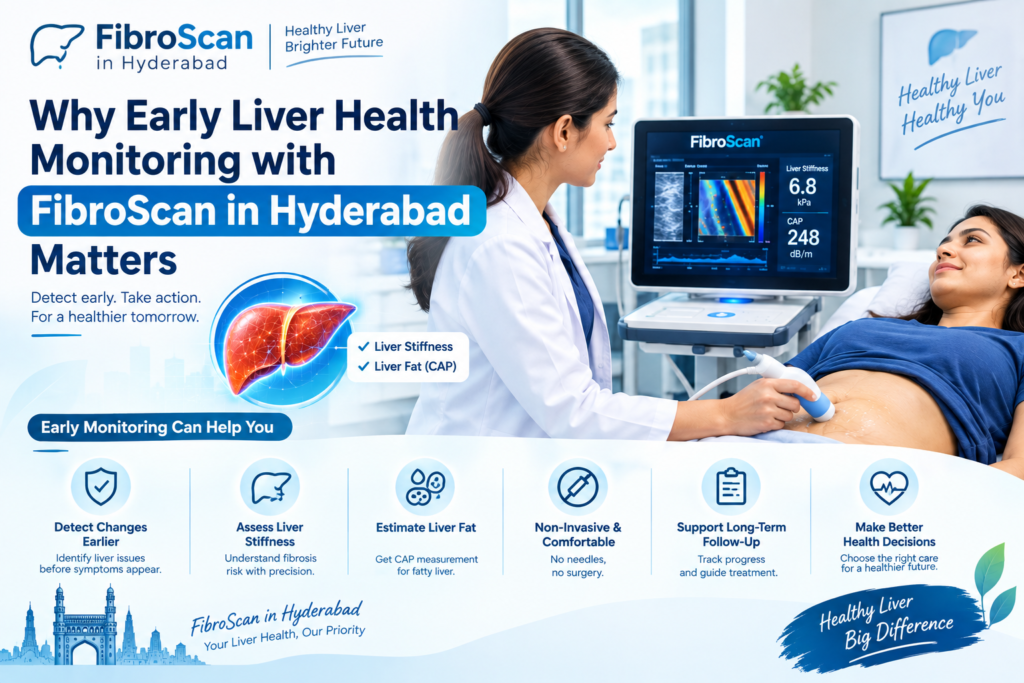
Introduction Liver health plays an important role in overall well-being, but liver-related problems may develop gradually without producing obvious symptoms in the early stages. This is why timely monitoring can be valuable, especially for people who have risk factors such as fatty liver, obesity, diabetes, high cholesterol, alcohol-related liver concerns, or a history of liver disease. FibroScan in Hyderabad provides a non-invasive approach for assessing liver stiffness and estimating liver fat. Unlike procedures that require tissue removal, FibroScan uses controlled vibrations and ultrasound-based technology to provide measurements that can help healthcare professionals understand certain aspects of liver health. Early awareness can make liver care more proactive. When changes are identified and monitored appropriately, doctors can recommend lifestyle adjustments, additional investigations, or follow-up assessments based on an individual’s condition. What Is FibroScan? FibroScan in Hyderabad is a specialized examination that uses transient elastography technology to assess liver stiffness. Liver stiffness can increase when fibrosis develops, although stiffness measurements can also be influenced by other factors. Therefore, results should always be interpreted in the appropriate clinical context. The examination is generally quick and non-invasive. A healthcare professional places a small probe against the skin over the liver area. The device sends controlled vibrations through the liver and measures how these vibrations travel through the tissue. A FibroScan examination can provide two commonly discussed measurements: liver stiffness measurement and controlled attenuation parameter, often referred to as CAP. Liver stiffness is expressed in kilopascals, while CAP provides an estimate related to liver fat. Why Early Liver Monitoring Matters Liver conditions can sometimes remain unnoticed for a long period. A person may feel healthy while underlying changes are gradually taking place. Regular health assessments can help identify possible concerns earlier. However, FibroScan is not a replacement for a complete medical evaluation. Doctors may combine the results with medical history, blood tests, imaging, physical examination, and other investigations. For people who need liver monitoring, FibroScan in Hyderabad can become one part of a broader healthcare plan. It can help provide objective measurements that doctors may compare over time. 1. Supports Earlier Awareness of Liver Changes One major advantage of appropriate liver monitoring is increased awareness. Some liver conditions progress slowly, making symptoms an unreliable indicator of what is happening inside the body. FibroScan in Hyderabad can help assess liver stiffness and estimate liver fat without requiring an invasive tissue sample. This can make it useful when a healthcare professional wants additional information about liver status. Early awareness does not automatically mean that a serious disease has been detected. Instead, it provides useful information that can support further medical evaluation when necessary. 2. Helps Assess Liver Stiffness Liver stiffness is an important measurement when evaluating fibrosis. Fibrosis refers to the development of scar tissue in the liver. FibroScan in Hyderabad measures liver stiffness using elastography. The resulting value may help healthcare professionals assess whether further evaluation or monitoring is appropriate. It is important to remember that stiffness can be affected by factors other than fibrosis. Therefore, a single reading should not be interpreted independently or treated as a complete diagnosis. 3. Helps Estimate Liver Fat Fat accumulation in the liver is increasingly recognized as an important health concern. It may be associated with metabolic conditions such as obesity, insulin resistance, diabetes, and abnormal cholesterol levels. FibroScan in Hyderabad can provide a CAP measurement that helps estimate the amount of fat in the liver. This information may be useful when assessing patients with suspected or known fatty liver. A CAP measurement is an estimate rather than a complete picture of liver health. Your doctor may consider it alongside other clinical information before making recommendations. 4. Enables Non-Invasive Monitoring Traditional liver biopsy involves removing a small tissue sample for laboratory examination. While biopsy can be valuable in selected situations, it is an invasive procedure and is not required for every patient. FibroScan in Hyderabad offers a non-invasive alternative for measuring liver stiffness and estimating liver fat. The examination does not involve cutting the skin or removing liver tissue. Because the procedure is non-invasive, it may be suitable for repeated assessment when recommended by a healthcare professional. 5. Can Support Long-Term Follow-Up Liver health management is not always a one-time process. Some people need periodic monitoring because of an existing liver condition or ongoing risk factors. FibroScan in Hyderabad may help doctors compare measurements from different examinations over time. This can provide additional information about how liver-related measurements are changing. The timing of repeat examinations depends on the person’s medical condition and the healthcare professional’s recommendations. There is no universal schedule that applies to everyone. Who May Benefit from Liver Monitoring? People with known or suspected liver conditions may be advised to undergo additional assessment. This can include individuals with fatty liver, chronic viral hepatitis, metabolic risk factors, or abnormal liver-related test results. People with persistent lifestyle-related risk factors may also benefit from discussing liver screening with a healthcare professional. FibroScan in Hyderabad may be considered when a doctor wants non-invasive information about liver stiffness or liver fat. Whether it is appropriate depends on the person’s history, symptoms, previous test results, and clinical requirements. People With Fatty Liver Fatty liver can occur when excess fat accumulates in liver cells. In some individuals, it remains relatively stable, while in others it may be associated with inflammation and fibrosis. FibroScan in Hyderabad can provide a CAP measurement for estimating liver fat and a stiffness measurement that may help assess fibrosis risk. Lifestyle management can be an important component of fatty liver care. Depending on individual circumstances, healthcare professionals may discuss weight management, physical activity, nutrition, blood sugar control, and cholesterol management. People With Metabolic Risk Factors Diabetes, obesity, high triglycerides, and other metabolic factors can be associated with liver health concerns. For people with these risk factors, FibroScan in Hyderabad may be recommended as part of a broader assessment when clinically appropriate. Regular monitoring does not mean that everyone with a metabolic condition needs FibroScan. The decision should be based on …

Why Early Liver Health Monitoring with FibroScan in Hyderabad Matters Read More »

FibroScan in Hyderabad

What You Should Know Before Getting a FibroScan in Hyderabad

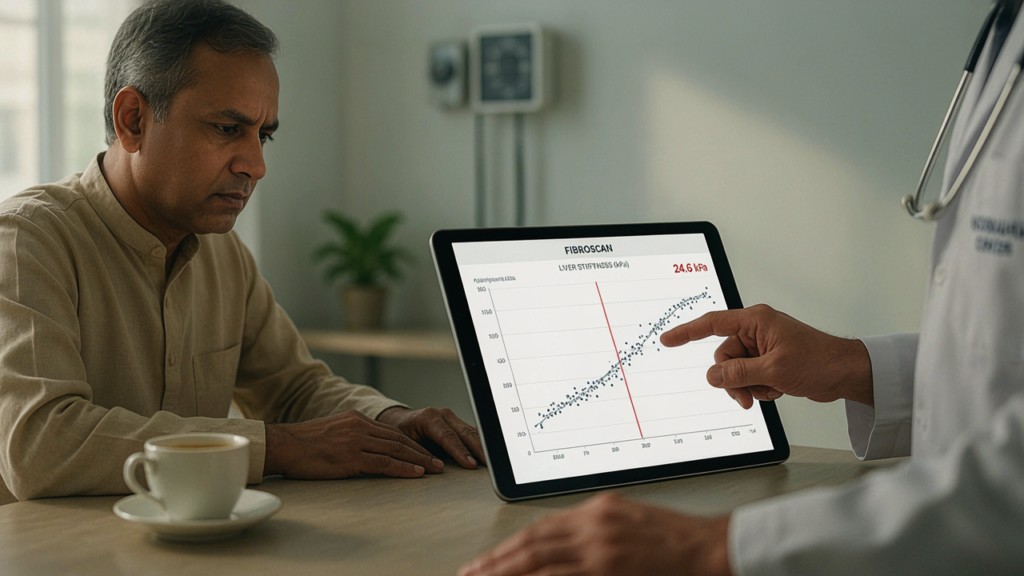
FibroScan in Hyderabad Liver health is an important part of overall well-being, but many liver-related changes can develop gradually without producing noticeable symptoms. When doctors need more information about liver stiffness or fat, they may recommend a non-invasive assessment called FibroScan. For people looking for FibroScan in Hyderabad, understanding the procedure, preparation, benefits, limitations, and results can make the testing experience easier and more informative. A FibroScan is different from many traditional medical investigations because it does not require a needle or surgical tissue removal. It uses specialized technology to assess the liver through measurements taken from outside the body. FibroScan in Hyderabad can therefore be useful for suitable patients who need additional information about their liver condition. Before scheduling a test, however, it is important to understand what FibroScan can and cannot tell you. The result should be interpreted by a qualified healthcare professional along with medical history, blood tests, imaging, symptoms, and other relevant information. What Is FibroScan? FibroScan is a non-invasive technology used to assess the condition of the liver. It primarily measures liver stiffness and can also provide information about liver fat through a measurement known as the Controlled Attenuation Parameter, or CAP. The device uses transient elastography. A small probe is placed against the skin over the liver area, and gentle vibrations are transmitted through the liver tissue. The device measures how the waves travel through the tissue and produces measurements that can help healthcare professionals assess liver stiffness. For people considering FibroScan in Hyderabad, one of the most important things to know is that the procedure does not involve removing a piece of liver tissue. This makes it different from a liver biopsy. The test is generally quick and painless. There is no surgical incision, and patients usually do not require a recovery period after the examination. What Does Liver Stiffness Mean? Liver stiffness is an important measurement because fibrosis, or the development of scar tissue, can make liver tissue harder. Fibrosis can develop when the liver experiences ongoing injury or inflammation. It may occur in association with different liver conditions. A FibroScan measurement can provide information about stiffness, but a single reading should not automatically be treated as a diagnosis. The doctor needs to consider the complete clinical picture. What Is Liver Fat? Another useful aspect of FibroScan technology is the assessment of liver fat through CAP measurements. Fat accumulation in the liver can occur for several reasons. Some people may have fatty liver without experiencing obvious symptoms. When FibroScan in Hyderabad is recommended for someone with suspected fatty liver, the CAP measurement may provide additional information alongside blood tests and imaging. Why Might a Doctor Recommend FibroScan? A doctor may recommend FibroScan when they want additional information about liver stiffness or fat. The exact reason depends on the patient’s medical history and other test findings. For example, a healthcare professional may consider the test when there are abnormal liver enzyme results, suspected fatty liver, known chronic liver disease, or concerns about liver fibrosis. People with certain metabolic or lifestyle-related risk factors may also require liver assessment based on professional medical advice. Choosing FibroScan in Hyderabad should not be based only on curiosity or online information. A doctor can determine whether the examination is suitable for the individual’s circumstances. Common Reasons for Liver Assessment There are several situations where additional liver evaluation may be considered: The reason for testing can differ considerably from one person to another. FibroScan in Hyderabad may be part of a broader diagnostic or monitoring plan rather than a standalone examination. What You Should Know Before Getting a FibroScan in Hyderabad Before booking FibroScan in Hyderabad, patients should understand that preparation instructions can vary between healthcare facilities and according to individual medical circumstances. Some centres may recommend fasting before the test. This is because food intake can influence certain measurements. Patients should therefore follow the specific instructions provided by the diagnostic centre or doctor. It is also useful to wear comfortable clothing that allows convenient access to the upper abdominal area. If you regularly take medicines or have an existing medical condition, inform the healthcare professional. Do not stop prescribed medicines unless your doctor specifically tells you to do so. Another important point is that FibroScan is not intended to replace every other liver investigation. FibroScan in Hyderabad provides particular measurements, while blood tests and imaging may provide different types of information. Is Fasting Necessary? Fasting requirements can depend on the centre and clinical situation. Some healthcare professionals recommend avoiding food for a specific period before the examination. The safest approach is to confirm the preparation instructions when booking your FibroScan in Hyderabad appointment. Following the instructions correctly can help ensure that the examination is performed under the recommended conditions. What Should You Wear? Comfortable, loose clothing is generally convenient for a FibroScan examination because the probe needs to be placed over the upper abdominal region. There is usually no need for special medical clothing. Patients can ask the diagnostic centre if they have any specific clothing or preparation requirements before their appointment. How Is FibroScan Performed? The procedure is relatively simple. The patient usually lies down on an examination bed and may be asked to raise one arm to make the liver area easier to access. A healthcare professional places the FibroScan probe against the skin over the liver region. A small amount of gel may be used to help the probe make proper contact with the skin. The device sends gentle vibrations through the liver tissue. These vibrations are measured electronically to determine liver stiffness. Several measurements may be taken during the examination to obtain useful readings. For people choosing FibroScan in Hyderabad, understanding the procedure beforehand can reduce anxiety because there are no injections, surgical cuts, or tissue removal involved in the standard examination. Is FibroScan Painful? FibroScan is generally considered painless. Patients may feel slight pressure from the probe against the skin, but the examination does not normally involve the type of discomfort associated …

What You Should Know Before Getting a FibroScan in Hyderabad Read More »

FibroScan in Hyderabad

What You Should Know Before Getting a FibroScan in Hyderabad

What You Should Know Before Getting a FibroScan in Hyderabad Liver health is an important part of overall well-being, but many liver-related changes can develop gradually without producing noticeable symptoms. When doctors need more information about liver stiffness or fat, they may recommend a non-invasive assessment called FibroScan. For people looking for FibroScan in Hyderabad, understanding the procedure, preparation, benefits, limitations, and results can make the testing experience easier and more informative. A FibroScan is different from many traditional medical investigations because it does not require a needle or surgical tissue removal. It uses specialized technology to assess the liver through measurements taken from outside the body. FibroScan in Hyderabad can therefore be useful for suitable patients who need additional information about their liver condition. Before scheduling a test, however, it is important to understand what FibroScan can and cannot tell you. The result should be interpreted by a qualified healthcare professional along with medical history, blood tests, imaging, symptoms, and other relevant information. What Is FibroScan? FibroScan is a non-invasive technology used to assess the condition of the liver. It primarily measures liver stiffness and can also provide information about liver fat through a measurement known as the Controlled Attenuation Parameter, or CAP. The device uses transient elastography. A small probe is placed against the skin over the liver area, and gentle vibrations are transmitted through the liver tissue. The device measures how the waves travel through the tissue and produces measurements that can help healthcare professionals assess liver stiffness. For people considering FibroScan in Hyderabad, one of the most important things to know is that the procedure does not involve removing a piece of liver tissue. This makes it different from a liver biopsy. The test is generally quick and painless. There is no surgical incision, and patients usually do not require a recovery period after the examination. What Does Liver Stiffness Mean? Liver stiffness is an important measurement because fibrosis, or the development of scar tissue, can make liver tissue harder. Fibrosis can develop when the liver experiences ongoing injury or inflammation. It may occur in association with different liver conditions. A FibroScan measurement can provide information about stiffness, but a single reading should not automatically be treated as a diagnosis. The doctor needs to consider the complete clinical picture. What Is Liver Fat? Another useful aspect of FibroScan technology is the assessment of liver fat through CAP measurements. Fat accumulation in the liver can occur for several reasons. Some people may have fatty liver without experiencing obvious symptoms. When FibroScan in Hyderabad is recommended for someone with suspected fatty liver, the CAP measurement may provide additional information alongside blood tests and imaging. Why Might a Doctor Recommend FibroScan? A doctor may recommend FibroScan when they want additional information about liver stiffness or fat. The exact reason depends on the patient’s medical history and other test findings. For example, a healthcare professional may consider the test when there are abnormal liver enzyme results, suspected fatty liver, known chronic liver disease, or concerns about liver fibrosis. People with certain metabolic or lifestyle-related risk factors may also require liver assessment based on professional medical advice. Choosing FibroScan in Hyderabad should not be based only on curiosity or online information. A doctor can determine whether the examination is suitable for the individual’s circumstances. Common Reasons for Liver Assessment There are several situations where additional liver evaluation may be considered: The reason for testing can differ considerably from one person to another. FibroScan in Hyderabad may be part of a broader diagnostic or monitoring plan rather than a standalone examination. What You Should Know Before Getting a FibroScan in Hyderabad Before booking FibroScan in Hyderabad, patients should understand that preparation instructions can vary between healthcare facilities and according to individual medical circumstances. Some centres may recommend fasting before the test. This is because food intake can influence certain measurements. Patients should therefore follow the specific instructions provided by the diagnostic centre or doctor. It is also useful to wear comfortable clothing that allows convenient access to the upper abdominal area. If you regularly take medicines or have an existing medical condition, inform the healthcare professional. Do not stop prescribed medicines unless your doctor specifically tells you to do so. Another important point is that FibroScan is not intended to replace every other liver investigation. FibroScan in Hyderabad provides particular measurements, while blood tests and imaging may provide different types of information. Is Fasting Necessary? Fasting requirements can depend on the centre and clinical situation. Some healthcare professionals recommend avoiding food for a specific period before the examination. The safest approach is to confirm the preparation instructions when booking your FibroScan in Hyderabad appointment. Following the instructions correctly can help ensure that the examination is performed under the recommended conditions. What Should You Wear? Comfortable, loose clothing is generally convenient for a FibroScan examination because the probe needs to be placed over the upper abdominal region. There is usually no need for special medical clothing. Patients can ask the diagnostic centre if they have any specific clothing or preparation requirements before their appointment. How Is FibroScan Performed? The procedure is relatively simple. The patient usually lies down on an examination bed and may be asked to raise one arm to make the liver area easier to access. A healthcare professional places the FibroScan probe against the skin over the liver region. A small amount of gel may be used to help the probe make proper contact with the skin. The device sends gentle vibrations through the liver tissue. These vibrations are measured electronically to determine liver stiffness. Several measurements may be taken during the examination to obtain useful readings. For people choosing FibroScan in Hyderabad, understanding the procedure beforehand can reduce anxiety because there are no injections, surgical cuts, or tissue removal involved in the standard examination. Is FibroScan Painful? FibroScan is generally considered painless. Patients may feel slight pressure from the probe against the skin, but the examination does not …

What You Should Know Before Getting a FibroScan in Hyderabad Read More »

FibroScan in Hyderabad

A Complete Guide to FibroScan in Hyderabad for Better Liver Health

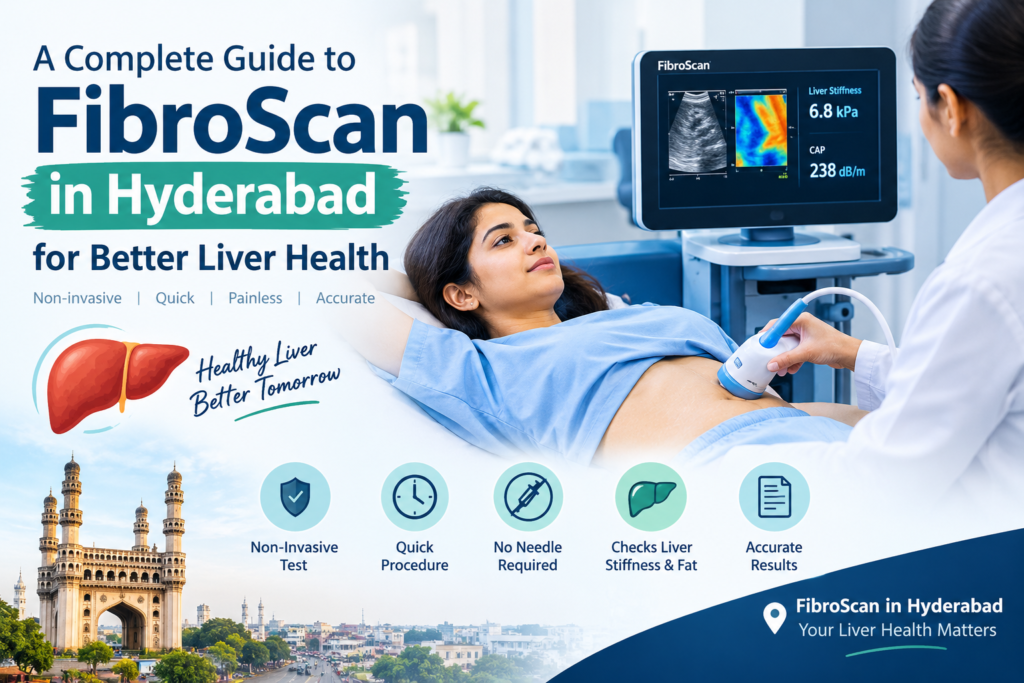
A Complete Guide to FibroScan in Hyderabad for Better Liver Health Liver health plays an important role in maintaining overall well-being. The liver performs several essential functions, including processing nutrients, supporting digestion, removing waste products, and helping regulate important substances in the body. When liver problems develop, they may not always cause noticeable symptoms in the early stages. This is why appropriate liver health monitoring can be valuable. FibroScan in Hyderabad is a modern, non-invasive method that can help healthcare professionals assess liver stiffness and fat. Unlike conventional procedures that may require needles or tissue samples, FibroScan uses painless technology to provide information about the condition of the liver. It can be useful for people who need liver assessment or monitoring based on their doctor’s recommendation. What Is FibroScan? FibroScan is a non-invasive liver assessment technology that measures liver stiffness and provides an estimate of liver fat through specialized measurements. It uses a technique called transient elastography to assess how easily a vibration travels through the liver. The information obtained from the test can help doctors understand whether the liver may have signs of fibrosis or increased fat. FibroScan in Hyderabad can therefore be considered an important tool when a healthcare professional wants additional information about liver health. The test does not involve surgical procedures or removal of liver tissue. It is generally quick and comfortable, making it convenient for appropriate patients. Why Is Liver Health Important? The liver is one of the body’s major organs and performs many functions every day. It helps process nutrients, produces important proteins, supports metabolism, and contributes to the body’s natural waste-processing systems. Liver conditions can sometimes progress without obvious symptoms. Fat accumulation, inflammation, and fibrosis may develop gradually. Regular medical evaluation can help identify concerns and allow doctors to recommend suitable management. For people who have risk factors for liver problems, FibroScan in Hyderabad may provide useful information about liver stiffness and fat when recommended by a qualified healthcare professional. What Does FibroScan Measure? FibroScan primarily provides measurements related to two important aspects of liver health: liver stiffness and controlled attenuation parameter (CAP), which is associated with liver fat. 1. Liver Stiffness Healthy liver tissue is generally softer. When fibrosis or scarring develops, the liver can become progressively stiffer. FibroScan measures this stiffness using elastic waves. Higher stiffness measurements can be associated with greater liver fibrosis, although results need to be interpreted in the context of the person’s overall clinical condition. 2. Liver Fat FibroScan technology can also provide information about fat accumulation in the liver through CAP measurement. Increased liver fat can occur for different reasons and may be associated with metabolic health factors. FibroScan in Hyderabad can help provide an additional assessment of liver fat when it is clinically appropriate. How Does FibroScan Work? The FibroScan device uses a small probe that is placed against the skin over the liver area. The device sends a gentle vibration into the liver and measures how the resulting wave travels through the tissue. The process is generally painless and does not require an incision. Multiple measurements may be taken to obtain a reliable assessment. The technology behind FibroScan in Hyderabad allows liver stiffness to be assessed without directly taking a tissue sample from the liver. Is FibroScan a Painful Test? One of the major advantages of FibroScan is that it is generally painless. The healthcare professional places the probe against the skin and takes measurements. Patients usually do not experience the discomfort associated with invasive procedures. There is also no surgical wound or recovery period from the test itself. Because of its convenient nature, FibroScan in Hyderabad may be suitable for people who need repeated liver monitoring under medical guidance. Who May Need a FibroScan? FibroScan is not automatically required for everyone. A doctor may recommend it depending on symptoms, medical history, laboratory findings, imaging results, or known liver-related risk factors. It may be considered in people with concerns such as fatty liver, chronic liver disease, suspected fibrosis, or other conditions where assessment of liver stiffness could provide useful information. People should discuss their individual situation with a healthcare professional before deciding whether FibroScan in Hyderabad is appropriate for th Several factors can lead a healthcare professional to recommend further liver evaluation Common Reasons for Liver Assessment These may include: The reason for testing differs from person to person. FibroScan in Hyderabad should be viewed as one part of a broader medical assessment rather than a standalone diagnosis. FibroScan for Fatty Liver Assessment Fatty liver refers to increased fat accumulation in the liver. It can occur due to several factors, including metabolic conditions, lifestyle factors, and certain medications or other medical causes. Some people with fatty liver may have no obvious symptoms. Therefore, evaluation may sometimes be recommended even when a person feels well. FibroScan in Hyderabad can provide information about liver fat and stiffness, helping healthcare professionals assess the liver more comprehensively alongside other investigations. FibroScan and Liver Fibrosis Fibrosis means the development of scar tissue in the liver. When the liver experiences ongoing injury or inflammation, fibrosis may develop over time. Fibrosis can exist at different stages. Identifying the level of liver stiffness can help doctors understand the possible extent of fibrosis and determine appropriate follow-up. FibroScan in Hyderabad offers a non-invasive way of measuring liver stiffness, which can be useful in the assessment and monitoring of fibrosis. FibroScan vs Liver Biopsy Liver biopsy has traditionally been used to examine liver tissue directly. It involves collecting a small tissue sample for laboratory examination. FibroScan is different because it does not require tissue removal. It measures liver stiffness using transient elastography and can also provide information associated with liver fat. Feature FibroScan Liver Biopsy Method Non-invasive measurement Tissue sample Needle required No Yes Surgical incision No Usually involves an invasive procedure Liver stiffness assessment Yes Tissue examination provides indirect information Liver fat assessment CAP measurement can help Can be assessed from tissue Recovery from procedure Generally none May require recovery Repeat monitoring …

A Complete Guide to FibroScan in Hyderabad for Better Liver Health Read More »

Complete Blood Test in Hyderabad

Complete Blood Test in Hyderabad

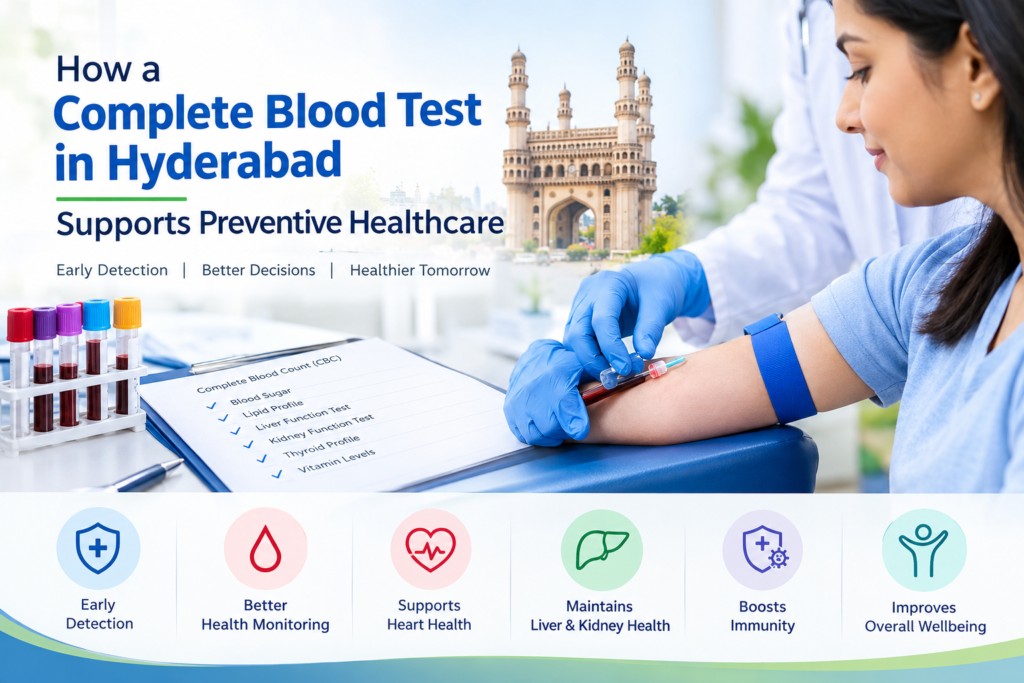
How a Complete Blood Test in Hyderabad Supports Preventive Healthcare Understanding Preventive Healthcare and Blood Testing Introduction Preventive healthcare is an important part of maintaining long-term health. Instead of waiting for symptoms to become serious, preventive care focuses on regular monitoring, healthy habits and timely medical guidance. A Complete Blood Test in Hyderabad can be a valuable part of this approach. Blood testing provides information about different health parameters and may help healthcare professionals understand certain changes taking place inside the body. Many health concerns can develop gradually. A person may feel completely normal while certain health markers are already changing. Regular testing can therefore support greater awareness of overall health. A blood test is not a diagnosis by itself. Results need to be interpreted according to the individual’s age, symptoms, medical history, lifestyle and other relevant factors. What Is a Complete Blood Test in Hyderabad? A Complete Blood Test in Hyderabad can refer to a group of blood investigations performed to evaluate different aspects of health. The exact tests included depend on the diagnostic package and the individual’s requirements. Common investigations may include a Complete Blood Count, blood glucose tests, lipid profile, liver function tests, kidney function tests, thyroid tests and selected vitamin or nutritional tests. The purpose of comprehensive testing is to provide useful laboratory information that can support preventive health monitoring. Complete Blood Test in Hyderabad and Preventive Healthcare Preventive healthcare focuses on identifying potential health concerns early and maintaining healthy habits. A Complete Blood Test in Hyderabad can contribute to this process by checking selected health markers. For example, blood testing may provide information about blood cells, glucose levels, cholesterol and other parameters. If a result appears outside the expected reference range, a healthcare professional can determine whether further evaluation is necessary. This approach can encourage people to take a more active role in their health rather than waiting until a problem becomes difficult to manage. Complete Blood Test in Hyderabad for Overall Health Assessment A Complete Blood Test in Hyderabad can provide a broader picture of selected areas of health. Instead of concentrating on one symptom, multiple parameters can be assessed through appropriate investigations. Different blood tests serve different purposes. A CBC can evaluate blood-cell-related parameters, while glucose testing focuses on blood sugar and a lipid profile evaluates cholesterol and triglycerides. When these results are considered together with other health information, they can support a more informed preventive assessment. Complete Blood Test in Hyderabad and Blood Health Blood performs several essential functions throughout the body. It transports oxygen, supports immune functions and helps maintain normal body processes. A Complete Blood Test in Hyderabad may include a CBC, which measures parameters related to red blood cells, white blood cells, haemoglobin and platelets. These results can be useful when investigating concerns such as unusual tiredness or weakness. However, an abnormal result does not automatically confirm a specific condition and may require further evaluation. Complete Blood Test in Hyderabad and Blood Sugar Monitoring Blood glucose is an important health parameter. A Complete Blood Test in Hyderabad may include fasting blood sugar or other glucose-related investigations depending on the selected package. HbA1c is another commonly used test that provides information about average blood glucose over a period of time. Regular monitoring can be useful for people with diabetes risk factors or those who have been advised to monitor glucose levels by a healthcare professional. Complete Blood Test in Hyderabad for Cholesterol Cholesterol and triglycerides are commonly evaluated through a lipid profile. A Complete Blood Test in Hyderabad may include this test as part of a comprehensive health package. The results can help healthcare professionals assess lipid levels alongside other cardiovascular risk factors. Healthy eating, regular physical activity and appropriate lifestyle changes are also important for maintaining cardiovascular health. Complete Blood Test in Hyderabad and Liver Health The liver performs many important functions, including processing nutrients and substances in the body. A Complete Blood Test in Hyderabad may include liver function tests when required. Liver-related blood tests can measure certain enzymes, proteins and other markers associated with liver function. If a result is abnormal, additional evaluation may be required. A single test result should not be used to diagnose a liver condition without professional interpretation. Complete Blood Test in Hyderabad and Kidney Health The kidneys help remove waste products and maintain fluid and electrolyte balance. A Complete Blood Test in Hyderabad may include kidney-related markers such as creatinine. Monitoring kidney-related parameters can be useful as part of preventive healthcare, particularly when a healthcare professional considers testing appropriate. People with certain risk factors may require more regular monitoring based on professional advice. Complete Blood Test in Hyderabad for Thyroid Health Thyroid hormones influence metabolism and several other body functions. A Complete Blood Test in Hyderabad may include thyroid investigations such as TSH, T3 and T4. Thyroid-related symptoms can overlap with many other health concerns. Changes in energy, weight or other symptoms should therefore be evaluated professionally rather than being self-diagnosed. Complete Blood Test in Hyderabad and Nutritional Health Nutrients such as vitamin B12, vitamin D and iron are important for normal body functions. Depending on individual requirements, a Complete Blood Test in Hyderabad package may include selected nutritional investigations. Testing can provide objective information when a healthcare professional suspects a deficiency. If a deficiency is identified, appropriate dietary changes or treatment can be discussed with a healthcare professional. Benefits of Complete Blood Test in Hyderabad A Complete Blood Test in Hyderabad can support preventive healthcare by providing useful information about selected health parameters. Health Area Common Test Purpose Blood health CBC Evaluates blood-cell-related parameters Blood sugar Glucose / HbA1c Monitors glucose levels Cholesterol Lipid Profile Evaluates cholesterol and triglycerides Liver Liver Function Tests Assesses selected liver-related markers Kidney Kidney Function Tests Monitors selected kidney markers Thyroid TSH, T3, T4 Evaluates thyroid-related parameters Nutrition Vitamin / Iron Tests Checks selected nutritional markers The exact tests included in a package can differ between diagnostic centres, so checking the complete test list is …

Complete Blood Test in Hyderabad Read More »

Lab Test Hyderabad

When Should You Visit a Diagnostic Lab Instead of Waiting?

Sometimes, a health problem starts with something that seems minor—a little fatigue, recurring headache, unexplained weakness, stomach discomfort, frequent urination, or a fever that does not seem to go away. It is easy to assume that the symptoms will disappear on their own. However, waiting too long can sometimes delay the identification of an underlying health issue. Knowing when to visit a diagnostic lab can help you take timely action. Laboratory investigations can provide valuable information about what may be happening inside the body and can help doctors make informed decisions about further evaluation or treatment. For people searching for a reliable lab test Hyderabad service, choosing a diagnostic centre that offers accurate testing, convenient services, and dependable reporting can make the process easier. Iris Diagnostics provides a range of diagnostic and laboratory testing services designed to support timely health evaluation. Why Timely Diagnostic Testing Matters Diagnostic tests are an important part of modern healthcare. While symptoms can provide clues, they do not always reveal the actual cause of a health problem. For example, tiredness may be associated with inadequate sleep, nutritional deficiencies, thyroid-related problems, infections, stress, or several other factors. Similarly, frequent headaches can have many possible causes. A laboratory test can provide objective information that may help a healthcare professional understand the situation better. If you are searching online for a lab test Hyderabad provider, consider a diagnostic centre that offers appropriate tests, clear reporting, and professional support. Testing does not necessarily mean that something serious is wrong. In many cases, it simply helps rule out potential causes and provides reassurance. 1. When a Fever Does Not Improve Fever is commonly associated with infections and may resolve with appropriate rest and care. However, persistent, recurrent, or unexplained fever should not always be ignored. If a fever continues longer than expected, repeatedly returns, or occurs along with symptoms such as significant weakness, dehydration, breathing difficulty, persistent vomiting, severe pain, or confusion, medical evaluation may be appropriate. Depending on the symptoms and clinical assessment, a doctor may recommend laboratory investigations to look for signs of infection or inflammation. Instead of repeatedly waiting for unexplained fever to disappear, consult a healthcare professional about whether testing is appropriate. A trusted lab test Hyderabad centre can help with the laboratory investigations recommended by your doctor. 2. When You Experience Unexplained Fatigue Everyone experiences tiredness occasionally. Lack of sleep, demanding work schedules, stress, travel, or physical activity can temporarily affect energy levels. But persistent fatigue without an obvious explanation deserves attention. Ongoing tiredness may sometimes be associated with nutritional deficiencies, anemia, thyroid abnormalities, infections, metabolic problems, or other health conditions. Rather than self-diagnosing based on internet searches or taking supplements without guidance, speak with a healthcare professional. They may recommend blood tests or other investigations based on your symptoms and medical history. If testing is advised, Iris Diagnostics can be considered when looking for a lab test Hyderabad service for routine and diagnostic laboratory investigations. 3. When You Notice Unexplained Weight Changes Unexpected weight loss or weight gain can sometimes occur because of changes in diet, exercise, lifestyle, or stress. However, significant or persistent changes without an obvious reason should be discussed with a doctor. Unexplained weight changes may have different potential causes, including metabolic, hormonal, nutritional, gastrointestinal, or other medical factors. A healthcare professional can determine whether diagnostic testing is necessary. Depending on the situation, tests may evaluate blood counts, glucose levels, thyroid function, liver or kidney-related markers, and other parameters. The important point is not to assume that every unexplained weight change indicates a serious condition. Instead, appropriate evaluation can help identify possible reasons. 4. When You Have Recurrent Digestive Problems Occasional indigestion or stomach discomfort may happen after dietary changes or overeating. But recurring digestive symptoms deserve more attention. Symptoms such as: may warrant medical evaluation. Your doctor may recommend blood tests, stool tests, imaging, or other investigations depending on the symptoms. If laboratory testing is recommended, finding a convenient lab test Hyderabad centre can make it easier to complete investigations without unnecessary delays. 5. When Urination Patterns Suddenly Change Changes in urination can sometimes be temporary, especially after changes in fluid intake. However, frequent urination, pain or burning while urinating, blood in urine, unusual urine color, or other persistent urinary symptoms should be discussed with a healthcare professional. Doctors may recommend urine investigations to identify possible urinary tract infections or other abnormalities. Depending on the symptoms, additional tests may also be required. A lab test Hyderabad provider such as Iris Diagnostics can be useful when your doctor recommends urine or other laboratory investigations. 6. When You Have Symptoms That Keep Returning One of the clearest signs that you should stop simply waiting is when the same unexplained symptom repeatedly returns. For example, you may experience: A symptom that repeatedly disappears and returns may deserve evaluation rather than repeated temporary management. Diagnostic testing can help provide information that may not be apparent from symptoms alone. However, tests should ideally be selected based on your symptoms and clinical situation rather than ordering random panels without medical guidance. 7. When You Have a Family History of Certain Conditions Family history can influence an individual’s risk of developing certain health conditions. If close family members have experienced conditions such as diabetes, thyroid disorders, cardiovascular disease, kidney disease, or other inherited or lifestyle-related conditions, discuss your risk with your healthcare professional. Your doctor may recommend periodic monitoring based on your age, medical history, lifestyle, and other risk factors. For example, people at increased risk of diabetes may be advised to monitor blood glucose or HbA1c levels. If your doctor recommends regular investigations, having access to a dependable lab test Hyderabad service can make routine monitoring more convenient. 8. When You Are Managing a Chronic Health Condition People living with chronic conditions may need periodic laboratory monitoring. Depending on the condition and treatment, doctors may monitor different parameters to understand whether the condition is controlled or whether treatment needs adjustment. For example, monitoring may be …

When Should You Visit a Diagnostic Lab Instead of Waiting? Read More »

Scroll to Top