
Liver health is essential for overall wellness, and understanding changes in the liver can help people make informed decisions about their health. FibroScan in Hyderabad is a modern, non-invasive assessment that provides valuable information about liver stiffness and liver fat. Two important measurements obtained through FibroScan technology are the Controlled Attenuation Parameter (CAP) and liver stiffness measurement. Understanding these measurements can support better awareness, timely evaluation, and effective liver health monitoring.
Many liver conditions, including fatty liver and liver fibrosis, can develop without noticeable symptoms during their early stages. FibroScan in Hyderabad can help healthcare professionals assess these conditions by providing objective measurements that complement blood tests, imaging, and medical history. When used appropriately, this technology can support a proactive and positive approach to liver care.
What Is FibroScan in Hyderabad?
FibroScan in Hyderabad refers to a non-invasive liver assessment using specialized technology to measure liver stiffness and estimate liver fat. The examination uses controlled vibrations and ultrasound-based measurements to understand how waves travel through liver tissue.
Unlike a liver biopsy, FibroScan does not require a surgical incision or removal of liver tissue. This makes it a convenient option for suitable patients who need an assessment of liver health or follow-up monitoring.
FibroScan can provide two important types of information: liver stiffness, which may help assess fibrosis, and CAP, which helps estimate fat accumulation in the liver. These measurements provide different information and should be interpreted together with other clinical findings.
Understanding CAP in FibroScan in Hyderabad
The Controlled Attenuation Parameter, commonly called CAP, is a measurement used to estimate the amount of fat present in liver tissue. Fat accumulation in the liver is known as hepatic steatosis and is commonly associated with fatty liver disease.
FibroScan in Hyderabad can provide a CAP value that helps healthcare professionals assess whether excess liver fat may be present. CAP measurements are generally expressed in decibels per meter (dB/m).
Higher CAP values may indicate a greater likelihood of liver fat, but the interpretation depends on clinical circumstances, the equipment used, and other relevant factors. CAP is an estimate rather than a direct measurement of every fat-containing liver cell.
Understanding CAP can help patients gain clearer information about their liver health and discuss suitable next steps with a qualified healthcare professional.
What Is Liver Stiffness in FibroScan in Hyderabad?
Liver stiffness measures how firm the liver tissue is. A healthy liver has a certain degree of elasticity, while fibrosis can make the tissue stiffer as scar tissue develops.
FibroScan in Hyderabad measures liver stiffness using a technique called transient elastography. The result is commonly reported in kilopascals (kPa).
Higher liver stiffness measurements can be associated with a greater likelihood of liver fibrosis. However, stiffness can also increase because of inflammation, liver congestion, and other factors. Therefore, a high value does not automatically confirm advanced liver disease.
A healthcare professional interprets the measurement alongside medical history, blood tests, symptoms, and other investigations to provide an appropriate assessment.
CAP vs. Liver Stiffness: Understanding the Difference
CAP and liver stiffness provide complementary information, but they do not measure the same thing. CAP estimates liver fat, whereas liver stiffness helps assess the likelihood of fibrosis.
FibroScan in Hyderabad can provide both measurements during the same examination when the equipment and testing conditions permit.
| Feature | CAP Measurement | Liver Stiffness Measurement |
|---|---|---|
| Main purpose | Estimates liver fat | Assesses liver stiffness |
| Related condition | Hepatic steatosis | Liver fibrosis |
| Unit | dB/m | kPa |
| What it helps assess | Likelihood of fat accumulation | Likelihood of scarring |
| Clinical value | Supports fatty liver assessment | Supports fibrosis assessment |
| Interpretation | Depends on clinical context | Depends on clinical context |
These measurements should be considered together with other clinical information. Neither measurement alone can provide a complete diagnosis of every liver condition.

How FibroScan in Hyderabad Helps Assess Fatty Liver
Fatty liver occurs when excess fat accumulates in the liver. It is frequently associated with obesity, insulin resistance, diabetes, high cholesterol, and other metabolic conditions. Alcohol consumption and certain medical conditions can also contribute to liver fat.
FibroScan in Hyderabad can help estimate liver fat through CAP measurements and assess liver stiffness at the same time. This information may help healthcare professionals understand different aspects of liver health.
Fat accumulation does not always mean that significant fibrosis is present. Some individuals have liver fat without advanced scarring, while others may have both steatosis and fibrosis.
A comprehensive assessment can help determine whether additional investigations, lifestyle changes, or ongoing monitoring may be appropriate.
Why Liver Stiffness Matters for Fibrosis Assessment
Fibrosis develops when ongoing liver injury leads to the formation of scar tissue. Common causes include chronic viral hepatitis, metabolic dysfunction-associated steatotic liver disease, alcohol-related liver disease, and certain other liver conditions.
FibroScan in Hyderabad provides a non-invasive liver stiffness measurement that can help healthcare professionals estimate the likelihood of clinically significant fibrosis.
Identifying potential fibrosis is important because the degree of scarring may influence medical management and follow-up recommendations. However, FibroScan cannot identify every type or cause of liver damage by itself.
The result must be interpreted according to the underlying condition and the individual’s overall health.
Can CAP and Liver Stiffness Detect Liver Problems Early?
Early liver disease may not cause obvious symptoms. A person can feel well while changes in liver fat or fibrosis are developing.
FibroScan in Hyderabad can provide useful measurements when a healthcare professional suspects fatty liver or needs to assess fibrosis risk. These results may support earlier evaluation and help guide decisions about further testing.
However, FibroScan does not detect every liver abnormality, and a normal result does not guarantee that all aspects of liver health are normal.
The most effective approach combines appropriate screening, medical evaluation, laboratory investigations, and healthy lifestyle choices.
Who May Benefit From FibroScan in Hyderabad?
FibroScan may be considered for people with known fatty liver, chronic hepatitis, abnormal liver enzyme results, metabolic risk factors, or other conditions associated with liver disease.
People living with diabetes, obesity, or metabolic syndrome may have an increased risk of fatty liver and could benefit from discussing liver assessment with their healthcare professional.
FibroScan in Hyderabad may also be used to support follow-up monitoring in patients with an established liver condition.
Not everyone needs this examination. A qualified healthcare professional can determine whether it is suitable based on medical history, risk factors, previous results, and current symptoms.
Understanding CAP Values and Liver Fat
CAP values are usually reported in dB/m. Higher values can indicate a greater likelihood of liver fat, but the thresholds used to classify steatosis may vary.
Factors such as the patient’s characteristics, the underlying liver condition, and the equipment or measurement technique can influence interpretation.
When reviewing FibroScan in Hyderabad results, patients should ask their healthcare professional what the CAP value means in their specific circumstances.
A CAP measurement can support fatty liver assessment, but it does not independently determine the cause of fat accumulation or establish the severity of every liver-related problem.
Understanding Liver Stiffness Values
Liver stiffness measurements are generally reported in kPa. These values provide information about the mechanical stiffness of liver tissue.
The meaning of a particular value depends on the underlying disease and clinical setting. Thresholds used to estimate fibrosis can differ between conditions, and no single cutoff applies to every patient.
FibroScan in Hyderabad results should therefore be interpreted by a qualified healthcare professional rather than compared with general internet charts without context.
If the result is unclear or inconsistent with other findings, additional tests or repeat measurements may be recommended.
Benefits of FibroScan in Hyderabad
FibroScan offers several practical advantages for appropriate patients who need liver assessment.
| Benefit | How It Helps |
|---|---|
| Non-invasive assessment | Does not require liver tissue removal |
| CAP measurement | Helps estimate liver fat |
| Stiffness measurement | Supports fibrosis risk assessment |
| Convenient examination | Usually performed in a short appointment |
| Repeat assessment | Can support clinically appropriate monitoring |
| Objective measurements | Provides numerical results for medical interpretation |
| Complementary information | Can be considered alongside blood tests and imaging |
These benefits make FibroScan in Hyderabad a useful option for selected patients who require more information about liver fat or stiffness.
What Happens During a FibroScan Examination?
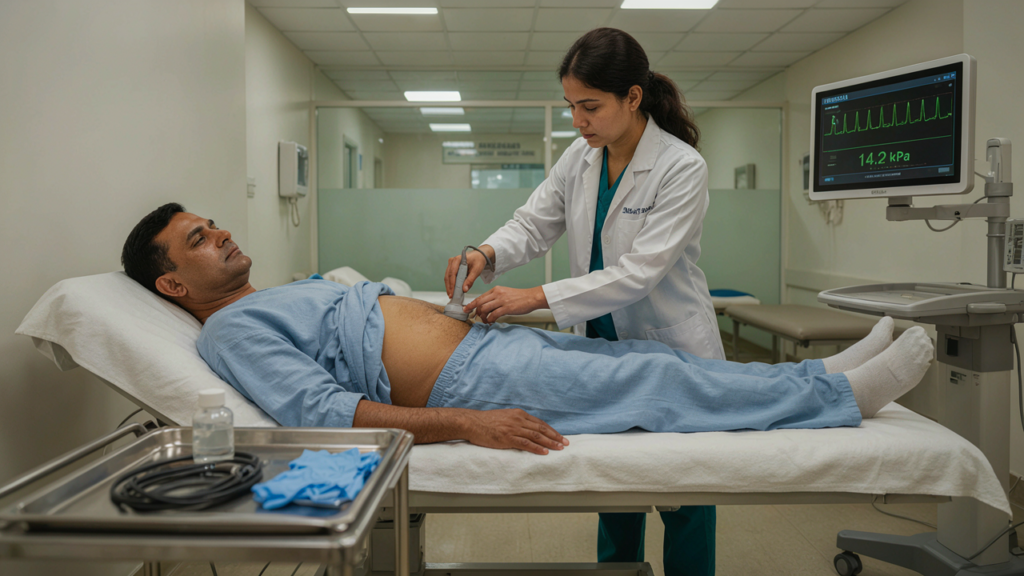
During the examination, the patient generally lies on an examination bed. A trained healthcare professional applies a probe to the skin over the liver area.
The device sends controlled vibrations into the liver and measures how waves travel through the tissue. CAP and stiffness measurements may be obtained during the same examination.
The procedure does not involve a surgical incision or removal of liver tissue. It is generally comfortable, although the exact experience and examination duration can vary.
Before the appointment, patients should confirm preparation instructions with their diagnostic centre.
How to Prepare for FibroScan in Hyderabad
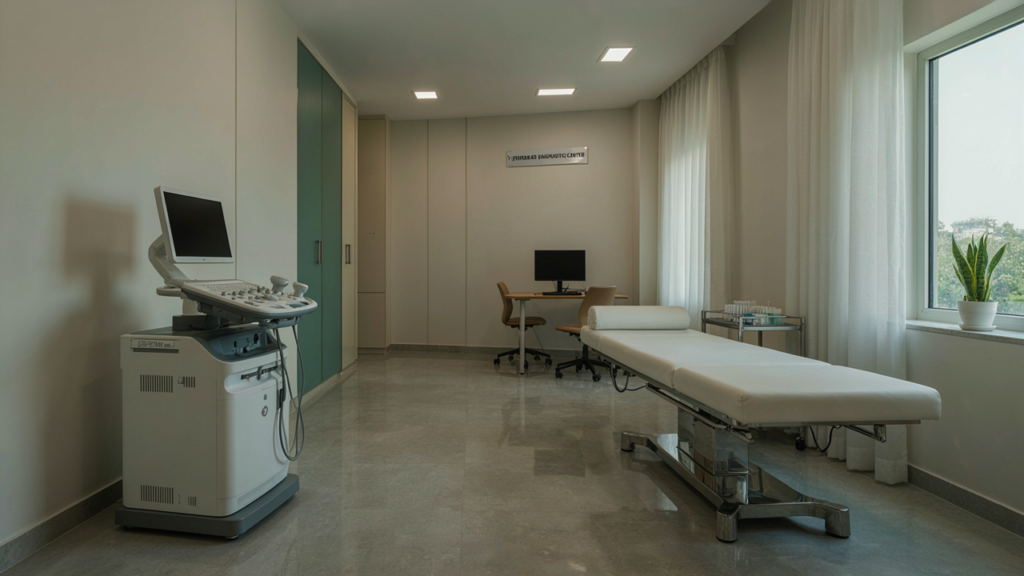
Preparation requirements can vary depending on the diagnostic centre and the patient’s circumstances. Some patients may be asked to fast for a specified period before testing because food intake can affect liver stiffness measurements.
Patients should follow the exact instructions provided by their healthcare professional or diagnostic centre.
If you take regular medication or have other medical concerns, ask whether any special arrangements are necessary. Do not stop prescribed medication without medical advice.
Appropriate preparation helps support reliable measurements and a smoother testing experience.
Factors That Can Affect CAP and Liver Stiffness
Although FibroScan provides useful information, certain factors can influence the results. These may include inflammation, liver congestion, recent food intake, measurement quality, and individual patient characteristics.
CAP values may also vary depending on the patient’s characteristics and the testing equipment.
For this reason, FibroScan in Hyderabad results should be reviewed alongside medical history, laboratory tests, and other relevant findings. If the measurements are unreliable or unexpected, a healthcare professional may recommend additional assessment.
Understanding these limitations helps patients avoid unnecessary worry and encourages more informed decisions.
Can CAP and Liver Stiffness Improve With Lifestyle Changes?
Lifestyle changes can support liver health, particularly when excess liver fat is associated with metabolic factors. Depending on an individual’s circumstances, healthcare professionals may recommend balanced nutrition, regular exercise, gradual weight management, and improved control of blood sugar and cholesterol.
Avoiding harmful alcohol consumption can also be important, particularly for people with alcohol-related liver concerns.
When clinically appropriate, follow-up FibroScan in Hyderabad assessments may help healthcare professionals monitor changes in liver fat or stiffness over time.
However, improvements are not guaranteed for every individual, and changes in measurements should always be interpreted in the context of the overall clinical picture.
FibroScan Compared With Other Liver Tests
FibroScan provides information that complements other diagnostic methods. Blood tests can help evaluate liver enzymes and other markers, while ultrasound can show structural features of the liver.
A liver biopsy may sometimes be required when other investigations do not provide enough information or when a more detailed assessment is needed.
FibroScan in Hyderabad does not automatically replace these other tests. Instead, it can contribute valuable information to a broader assessment plan.
The choice of tests depends on the patient’s symptoms, risk factors, suspected condition, and healthcare professional’s clinical judgment.
How Often Should FibroScan Be Repeated?
There is no single follow-up schedule that is appropriate for everyone. The timing depends on the underlying liver condition, previous measurements, treatment plan, and overall risk profile.
Some patients may need periodic reassessment, while others may not require frequent repeat examinations.
FibroScan in Hyderabad can support long-term monitoring when repeat testing is recommended. Comparing results over time may help healthcare professionals understand changes in liver health, although small differences can also occur because of measurement variability.
Patients should follow an individualized monitoring plan rather than arranging repeated examinations unnecessarily.
Taking Positive Steps Toward Better Liver Health
Understanding CAP and liver stiffness can help patients have more productive conversations with their healthcare professionals.
Healthy eating, regular physical activity, maintaining an appropriate weight, and managing metabolic conditions can support overall well-being. People with diagnosed liver disease should follow personalized medical advice and avoid unproven treatments.
FibroScan in Hyderabad can provide helpful measurements as part of this process, but the most important step is using the results to support appropriate medical care.
A positive approach combines awareness, professional guidance, healthy habits, and follow-up when needed.
Conclusion: Make Informed Choices With FibroScan in Hyderabad
CAP and liver stiffness are two important measurements that provide different information about liver health. CAP helps estimate liver fat, while stiffness measurements support the assessment of fibrosis risk.
FibroScan in Hyderabad offers a non-invasive way to obtain these measurements and may be useful for people who need assessment or monitoring for fatty liver and other liver-related conditions.
Although these measurements cannot diagnose every liver problem independently, they can complement blood tests, imaging, and clinical evaluation. Understanding your results and discussing them with a qualified healthcare professional can support better decisions and a more proactive approach to long-term liver wellness.
Frequently Asked Questions
1. What is CAP in FibroScan in Hyderabad?
CAP stands for Controlled Attenuation Parameter. It is a measurement that helps estimate the amount of fat present in liver tissue.
2. What does liver stiffness mean?
Liver stiffness measures how firm the liver tissue is. Increased stiffness may be associated with fibrosis, but inflammation and other factors can also affect the result.
3. What is the difference between CAP and liver stiffness?
CAP estimates liver fat, whereas liver stiffness helps assess the likelihood of fibrosis. The two measurements provide complementary information about liver health.
4. Can FibroScan detect fatty liver?
FibroScan can provide a CAP measurement that helps estimate liver fat. A healthcare professional may recommend additional investigations to complete the assessment.
5. Is FibroScan a painful procedure?
No. FibroScan is non-invasive and does not require a surgical incision or removal of liver tissue. Most patients find it comfortable.
6. What units are used for CAP and liver stiffness?
CAP is generally reported in dB/m, while liver stiffness is reported in kPa.
7. Does a high liver stiffness value always mean fibrosis?
No. Higher stiffness can be associated with fibrosis, but inflammation, congestion, and other factors may influence the measurement. Professional interpretation is important.
8. Who should consider FibroScan?
People with fatty liver, chronic hepatitis, abnormal liver enzyme results, metabolic risk factors, or known liver disease may be considered for testing based on medical advice.
9. Do I need to fast before FibroScan?
Fasting may be recommended before the examination, but preparation instructions vary. Follow the guidance provided by your diagnostic centre.
10. Can FibroScan results improve over time?
Measurements may change as liver health changes. However, improvements depend on the underlying condition, and results should be compared by a healthcare professional.
11. Does FibroScan replace a liver biopsy?
Not in every case. FibroScan provides non-invasive information, but some patients may require additional testing or a biopsy depending on their clinical situation.
12. How often should I repeat FibroScan?
The appropriate frequency depends on your liver condition, risk factors, and previous results. Your healthcare professional can recommend a suitable follow-up schedule.
13. Can FibroScan measure liver fat and fibrosis together?
Yes. FibroScan technology can provide CAP and liver stiffness measurements during the same examination when suitable measurements are obtained.
14. Why is professional interpretation necessary?
CAP and stiffness values must be interpreted alongside medical history, blood tests, symptoms, and other findings to avoid misleading conclusions.
Final Takeaway: Understanding CAP and liver stiffness can make liver health assessment clearer and more informative. When recommended by a healthcare professional, FibroScan in Hyderabad can provide useful non-invasive measurements to support informed decisions, appropriate monitoring, and better long-term liver care.
Call or WhatsApp: +91 81422 01122
Follow Iris Diagnostic on Instagram:https://www.instagram.com/irisdiagnostics/