
what to Expect During a Scrotum Scan for Infertility
When couples are trying to conceive, understanding the possible causes of infertility can be an important step toward better care. Male reproductive health can be affected by several conditions involving the testicles, epididymis, blood vessels, and surrounding tissues. A Scrotum Scan for Infertility is a useful imaging examination that helps healthcare professionals evaluate these structures and identify possible abnormalities. It is a safe, non-invasive, and generally comfortable procedure that can provide valuable information for further evaluation.
A Scrotum Scan for Infertility commonly involves ultrasound imaging of the scrotum and testicles. Depending on the clinical requirement, Doppler technology may also be used to assess blood flow. This can help detect conditions such as varicocele, cysts, inflammation, fluid collection, or other structural changes that may affect reproductive health.
For anyone advised to undergo a Scrotum Scan for Infertility, knowing what happens before, during, and after the examination can make the experience more comfortable and reassuring. The procedure is usually straightforward and does not require complicated preparation.
What Is a Scrotum Scan for Infertility?
A Scrotum Scan for Infertility is an ultrasound-based examination used to assess the scrotum, testicles, epididymis, and surrounding tissues. Ultrasound uses high-frequency sound waves to create images of internal structures without radiation.
The examination can provide useful information about the size, shape, position, and appearance of the testicles. It may also help identify changes in blood flow, particularly when Doppler ultrasound is included.
A Scrotum Scan for Infertility does not directly determine whether a person is fertile or infertile. Instead, it helps identify structural or vascular conditions that may be associated with male reproductive difficulties. The findings are generally considered alongside medical history, physical examination, semen analysis, hormone tests, and other investigations when needed.
Why Is a Scrotum Scan for Infertility Recommended?
There can be several reasons why a doctor recommends a Scrotum Scan for Infertility. Male infertility may have multiple contributing factors, and imaging can help provide a clearer understanding of certain physical conditions.
One common reason is suspected varicocele. A varicocele is an enlargement of veins around the testicle and may sometimes be associated with impaired sperm production. Doppler ultrasound can help evaluate blood flow and identify enlarged veins.
A Scrotum Scan for Infertility may also be considered when there is testicular pain, swelling, a lump, asymmetry, previous injury, infection, or an abnormal finding during physical examination.
In some situations, imaging may be recommended after an abnormal semen analysis to investigate whether an underlying structural condition could be contributing to fertility concerns.
What Can a Scrotum Scan for Infertility Detect?
A Scrotum Scan for Infertility can help visualize several structures and identify different abnormalities. The exact findings depend on the individual’s condition and the quality of the examination.
Potential findings may include:
| Condition or Finding | What the Scan May Show |
|---|---|
| Varicocele | Enlarged veins and changes in blood flow |
| Epididymal cyst | Fluid-filled cystic structure |
| Hydrocele | Fluid surrounding the testicle |
| Testicular changes | Alterations in size or appearance |
| Inflammation | Changes associated with infection or inflammation |
| Testicular mass | Abnormal solid or cystic area |
| Scrotal fluid | Collection around reproductive structures |
| Blood-flow changes | Abnormal vascular patterns |
| Injury-related changes | Structural abnormalities after trauma |
A Scrotum Scan for Infertility can therefore be an important diagnostic step when a healthcare professional wants additional information about the male reproductive system.
How Should You Prepare for a Scrotum Scan for Infertility?
One of the positive aspects of a Scrotum Scan for Infertility is that extensive preparation is generally not required. In most cases, patients can follow their normal routine unless their healthcare provider gives specific instructions.
It is useful to wear comfortable clothing because the examination requires access to the scrotal area. You may be asked to remove certain clothing items before the examination and use a gown or covering for privacy.
If you have previous ultrasound reports, semen analysis results, blood tests, or other relevant medical records, keeping them available can be helpful. Your healthcare provider may use previous results to understand your current condition more effectively.
Before a Scrotum Scan for Infertility, inform the healthcare professional about any symptoms such as pain, swelling, heaviness, a lump, or recent injury. This information can help guide the examination.
What Happens Before the Scan?
Before a Scrotum Scan for Infertility, a trained sonographer or healthcare professional may ask about your symptoms and relevant medical history.
You may be asked about the duration of fertility concerns, previous injuries, surgeries, infections, pain, swelling, or other reproductive health concerns.
The healthcare professional will explain the examination and position you appropriately. Maintaining privacy and comfort is an important part of the process.
Unlike some other imaging tests, fasting is usually not necessary for a routine scrotal ultrasound. However, always follow the instructions provided by your healthcare facility.
What Happens During a Scrotum Scan for Infertility?
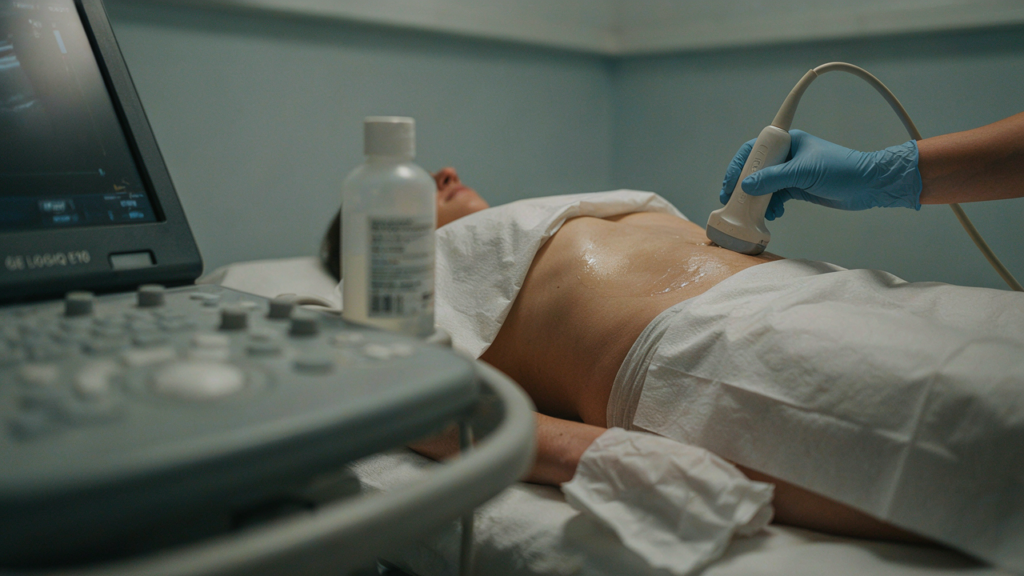
During a Scrotum Scan for Infertility, you will usually lie on your back. A towel or support may be placed underneath the scrotum to provide comfort and stability during the examination.
A small amount of ultrasound gel is applied to the skin. The gel helps the ultrasound probe move smoothly and allows sound waves to travel effectively into the body.
The sonographer gently moves the ultrasound transducer over the scrotal area. Images are captured of both testicles and surrounding structures.
During a Scrotum Scan for Infertility, the healthcare professional may examine the testicles from different angles to obtain clear images. Measurements may also be taken to compare the size and appearance of both testicles.
If Doppler ultrasound is required, the examination may also assess blood flow through the vessels around the testicles. This can be particularly helpful when varicocele or another vascular concern is suspected.
Is a Scrotum Scan for Infertility Painful?
For most people, a Scrotum Scan for Infertility is a comfortable and non-invasive examination. There are no needles, injections, or radiation involved in a standard ultrasound.
You may feel gentle pressure as the transducer moves across the area. If you already have pain or tenderness, you may experience some discomfort when the probe touches the sensitive area.
It is important to communicate with the sonographer if you feel uncomfortable. The examination can often be adjusted to make the experience easier.
Overall, a Scrotum Scan for Infertility is considered a simple diagnostic procedure and usually takes a relatively short time.
How Long Does a Scrotum Scan for Infertility Take?
The duration of a Scrotum Scan for Infertility can vary depending on the examination and whether Doppler assessment is required. A routine examination may often be completed within approximately 15 to 30 minutes.
More detailed examinations can sometimes take longer, particularly if the healthcare professional needs additional images or measurements.
The exact duration should not be considered a measure of whether a condition is serious. Sometimes additional time is simply needed to obtain clear and complete images.
What Does Doppler Show During a Scrotum Scan?
Doppler technology can add valuable information to a Scrotum Scan for Infertility by evaluating blood movement through vessels.
This can be especially useful when checking for varicocele. Doppler imaging can help assess the size and behavior of veins and identify abnormal blood flow patterns.
The healthcare professional may ask you to change your position or perform a simple breathing maneuver during the examination. These steps can sometimes make vascular abnormalities more visible.
A Scrotum Scan for Infertility with Doppler can therefore provide both structural and blood-flow information, giving the doctor a more comprehensive view of the scrotal region.
What Results Can a Scrotum Scan for Infertility Provide?
A Scrotum Scan for Infertility can provide detailed information about the appearance of the testicles and surrounding structures.
The report may describe testicular size, echogenicity, blood flow, epididymal appearance, fluid collections, cysts, veins, or other abnormalities.
Normal findings can be reassuring, but a normal ultrasound does not automatically mean that there are no fertility-related issues. Infertility can result from hormonal, genetic, sperm-related, lifestyle, or other factors that may not be visible on ultrasound.
Similarly, an abnormal imaging finding does not automatically mean that a person cannot conceive. The significance of each finding should be assessed by a qualified healthcare professional.
Understanding Varicocele Through a Scrotum Scan
One of the important applications of a Scrotum Scan for Infertility is evaluation of suspected varicocele.
A varicocele involves enlarged veins in the scrotum. Some varicoceles are associated with fertility problems, although not every person with a varicocele experiences infertility.
Ultrasound with Doppler can help identify enlarged veins and evaluate blood flow. The findings may support further clinical evaluation.
If a varicocele is identified during a Scrotum Scan for Infertility, the doctor may consider factors such as symptoms, physical examination findings, semen analysis, and fertility history before deciding whether treatment or monitoring is appropriate.
Can a Scrotum Scan Diagnose Male Infertility?
A Scrotum Scan for Infertility is an important imaging test, but it is not usually a standalone fertility test.
Male infertility evaluation commonly involves semen analysis because sperm count, movement, and morphology provide important information about reproductive potential.
Depending on the situation, doctors may also recommend hormone testing, genetic investigations, physical examination, or additional imaging.
Therefore, a Scrotum Scan for Infertility should be viewed as one part of a complete fertility assessment rather than a test that independently confirms or excludes infertility.
What Happens After a Scrotum Scan for Infertility?
After a Scrotum Scan for Infertility, there is generally no lengthy recovery period. Most people can return to their normal daily activities immediately unless their healthcare provider gives different advice.
The images are reviewed and a report is prepared by an appropriately qualified professional. Your doctor can then explain the findings and determine whether additional tests are necessary.
If the scan identifies a possible issue, your doctor may recommend further evaluation rather than immediately starting treatment. This approach helps ensure that decisions are based on the complete clinical picture.
Benefits of a Scrotum Scan for Infertility
There are several valuable benefits associated with a Scrotum Scan for Infertility.
1. Non-Invasive Examination
The procedure does not require surgical intervention or needles. This makes it a convenient diagnostic option.
2. No Radiation
Ultrasound uses sound waves rather than ionizing radiation, making it a commonly used imaging method for evaluating scrotal structures.
3. Detailed Structural Assessment
The examination can provide useful images of the testicles, epididymis, surrounding tissues, and blood vessels.
4. Doppler Blood-Flow Evaluation
When Doppler is included, the scan can provide additional information about circulation and vascular conditions.
5. Helpful for Further Diagnosis
The results can help doctors decide whether additional fertility testing or specialist evaluation is needed.
A Scrotum Scan for Infertility can therefore offer valuable information and support a more focused approach to reproductive health evaluation.
Important Questions to Ask Before the Scan
Before undergoing a Scrotum Scan for Infertility, you can ask the healthcare team:
- Do I need any preparation?
- Will Doppler ultrasound be included?
- How long will the examination take?
- When will the report be available?
- Do I need to bring previous reports?
- Should I continue my regular medicines?
- What happens if an abnormality is detected?
Getting clear answers can make the experience more comfortable and help you understand the next steps.
Factors That May Affect the Fertility Evaluation
Although a Scrotum Scan for Infertility can provide important structural information, fertility is influenced by many factors.
Sperm production can be affected by hormonal health, age, certain medical conditions, infections, medications, lifestyle factors, smoking, alcohol consumption, heat exposure, and other circumstances.
For this reason, imaging results should be interpreted alongside other investigations. A comprehensive assessment can provide a stronger foundation for appropriate medical guidance.
When Should You Consider a Scrotum Scan for Infertility?
A Scrotum Scan for Infertility may be recommended when there are fertility concerns along with symptoms or clinical findings involving the scrotum.
It may also be considered when a doctor suspects varicocele, testicular abnormalities, inflammation, cysts, fluid collections, or other structural concerns.
If you have been trying to conceive without success, discussing the situation with a qualified healthcare professional is a positive first step. They can determine which investigations are suitable for your individual circumstances.

Making the Most of Your Scrotum Scan for Infertility
To make your Scrotum Scan for Infertility experience smooth and effective, choose a reliable diagnostic facility with qualified professionals and appropriate ultrasound equipment.
Share your relevant medical history honestly and mention any pain, swelling, injury, or other symptoms. Bring previous reports if available so the healthcare professional has useful background information.
Most importantly, avoid interpreting the scan report on your own. Medical imaging terminology can be difficult to understand, and a doctor can explain what each finding means in relation to your overall reproductive health.
Conclusion
A Scrotum Scan for Infertility is a valuable, safe, and non-invasive imaging examination that can help evaluate the testicles, epididymis, blood vessels, and surrounding scrotal structures. It can be particularly useful when investigating conditions such as varicocele, cysts, inflammation, fluid collections, or structural abnormalities.
Understanding what to expect can reduce anxiety and help you approach the examination with confidence. The procedure generally requires little preparation, does not involve radiation, and can often be completed within a short period.
However, a Scrotum Scan for Infertility is only one component of a complete fertility assessment. Results should be interpreted together with semen analysis, medical history, physical examination, and other tests recommended by your healthcare professional.
With timely evaluation, accurate information, and appropriate medical guidance, fertility concerns can be approached in a more informed and positive way.
Frequently Asked Questions
1. Is a Scrotum Scan for Infertility safe?
Yes. A Scrotum Scan for Infertility uses ultrasound sound waves and does not involve ionizing radiation. It is generally considered a safe and non-invasive diagnostic examination.
2. Is preparation required before a Scrotum Scan for Infertility?
Usually, extensive preparation is not required. You should follow any specific instructions provided by your diagnostic centre or doctor.
3. Does a Scrotum Scan for Infertility hurt?
The examination is generally comfortable. You may feel mild pressure from the ultrasound probe. If the area is already painful or sensitive, some temporary discomfort may occur.
4. Can a Scrotum Scan for Infertility detect varicocele?
Yes. Ultrasound, particularly with Doppler assessment, can help identify enlarged veins and abnormal blood-flow patterns associated with varicocele.
5. How long does a Scrotum Scan for Infertility take?
A routine examination may take around 15–30 minutes, although the duration can vary depending on the required assessment and whether additional Doppler imaging is performed.
6. Can the scan confirm infertility?
No. A Scrotum Scan for Infertility cannot independently confirm infertility. It evaluates physical and vascular structures, while other tests such as semen analysis may be needed for a complete fertility evaluation.
7. Can I return to normal activities after the scan?
In most cases, yes. Because the examination is non-invasive, there is generally no recovery period. Follow your doctor’s advice if additional instructions are provided.
8. Why might Doppler be added to the scan?
Doppler can evaluate blood flow around the testicles and may provide useful information when conditions such as varicocele are suspected.
9. What if my Scrotum Scan for Infertility is normal?
A normal scan can be reassuring, but it does not rule out every possible cause of fertility difficulty. Your doctor may recommend other investigations depending on your circumstances.
10. Should I bring previous fertility reports?
Yes. Bringing previous semen analysis, ultrasound reports, blood tests, or relevant medical records can help your healthcare professional understand your history and plan appropriate next steps.
Call or WhatsApp: +91 81422 01122
Follow Iris Diagnostic on Instagram:https://www.instagram.com/irisdiagnostics/